China's massive underground neutrino observatory 'JUNO' announces first observation results
[2511.14593] First measurement of reactor neutrino oscillations at JUNO
https://arxiv.org/abs/2511.14593
JUNO Neutrino Observatory Releases First Results | Scientific American
https://www.scientificamerican.com/article/juno-neutrino-observatory-releases-first-results/
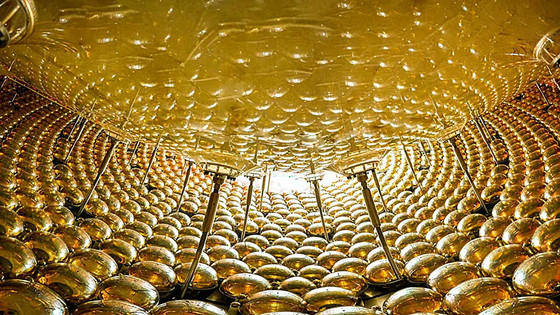
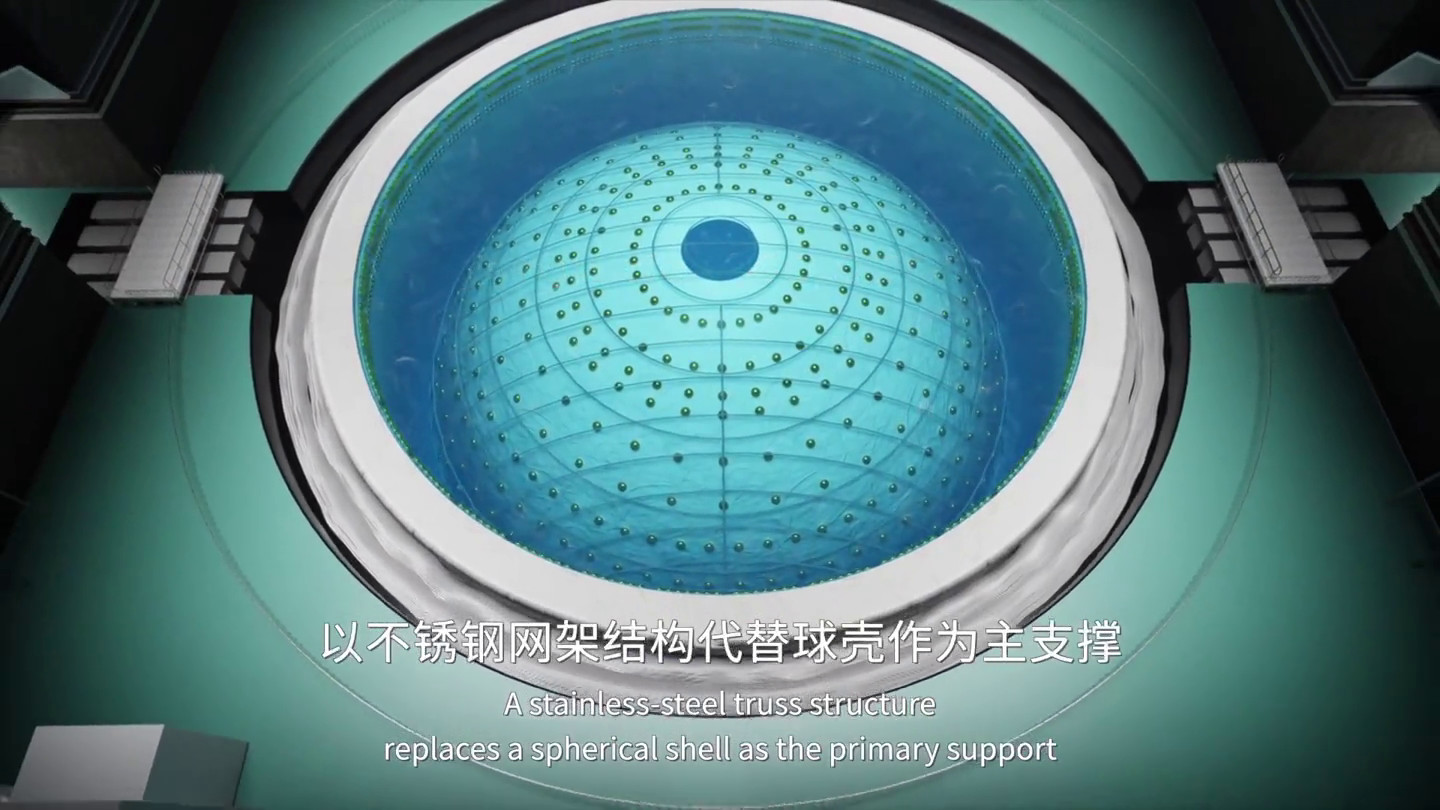
The JUNO detector is one of the world's largest instruments designed to capture elementary particles called neutrinos. The center of the experiment is a 35.4-meter-diameter acrylic sphere filled with 20,000 tons of liquid scintillator. Liquid scintillator is a liquid that emits a faint light when charged particles pass through it. Surrounding the sphere are approximately 18,000 20-inch photomultiplier tubes (PMTs) and 26,000 3-inch PMTs, which detect the faint light emitted within the liquid scintillator.
Furthermore, the entire detector is submerged in a cylindrical pool 43.5 meters in diameter and 44 meters deep, filled with ultra-pure water to block out external radiation noise.
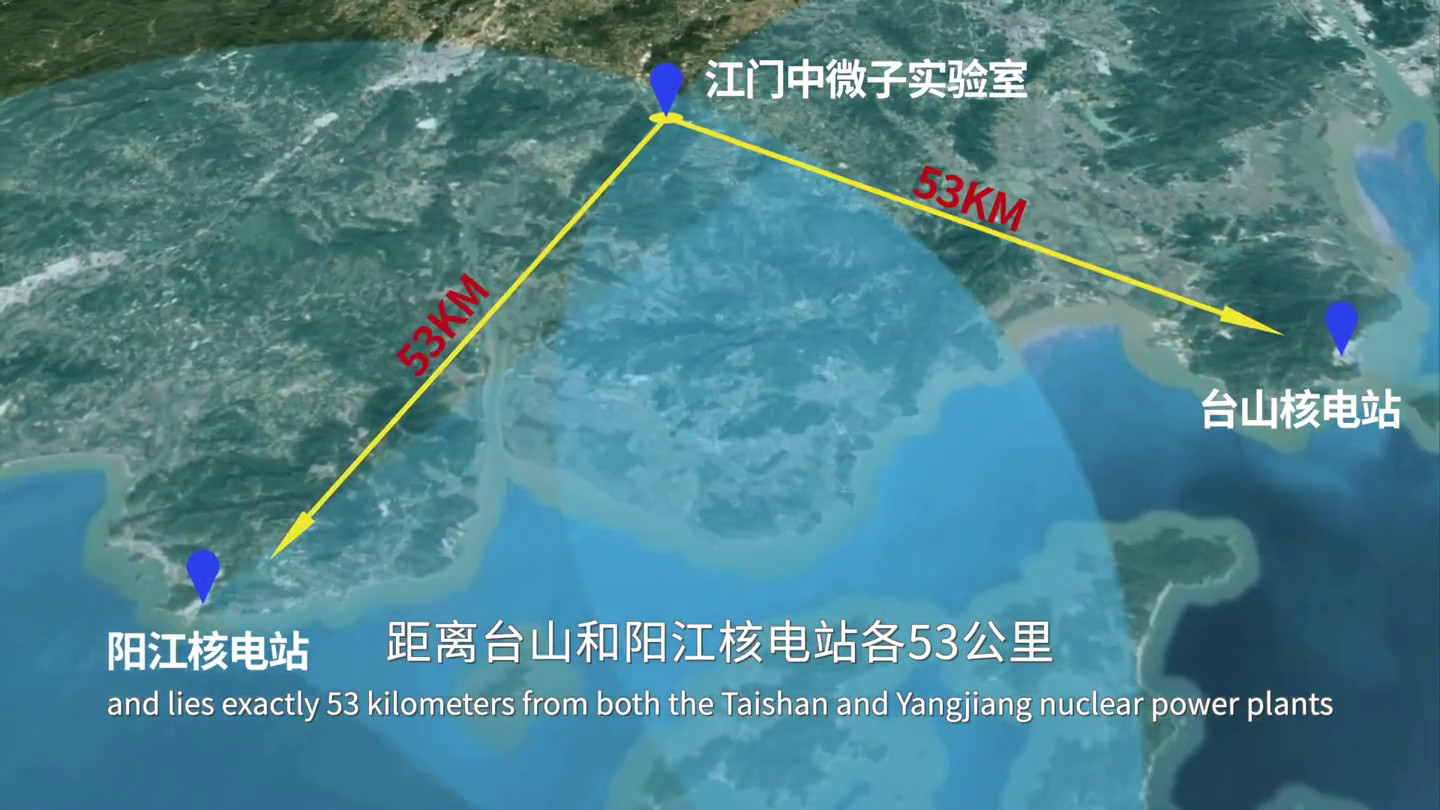
This detector is designed to observe anti-electron neutrinos emitted from the Yangjiang Nuclear Power Plant and the Taishan Nuclear Power Plant, located approximately 53 km apart. When anti-electron neutrinos collide with protons in the liquid scintillator, a reaction called
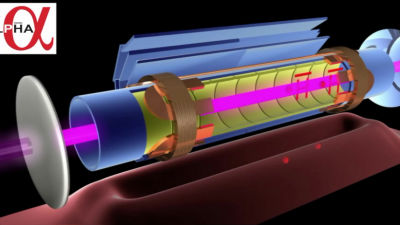
JUNO also uses a water Cherenkov detector and a top tracker to remove background noise from cosmic ray muons, enabling it to obtain extremely pure data.
By analyzing data acquired between August 26 and November 2, 2025, JUNO succeeded in obtaining the world's most accurate measurement of solar neutrino oscillation parameters. Neutrino oscillation is a phenomenon in which neutrinos change species during flight, and parameters such as the mixing angle and mass squared difference are required to describe this phenomenon.
Until now, a slight discrepancy has been noted between the data obtained from observations of 'solar neutrinos,' produced by nuclear fusion reactions in the Sun, and the data obtained from observations of 'reactor neutrinos,' produced by nuclear fission reactions in nuclear reactors, suggesting the possibility of the existence of unknown physical laws. JUNO's latest measurement results reconfirm this discrepancy, and by accumulating more data and measuring both solar neutrinos and reactor neutrinos with the same detector, it is hoped that we will be able to verify whether this discrepancy is a statistical error or the result of a new physical phenomenon that goes beyond the Standard Model.
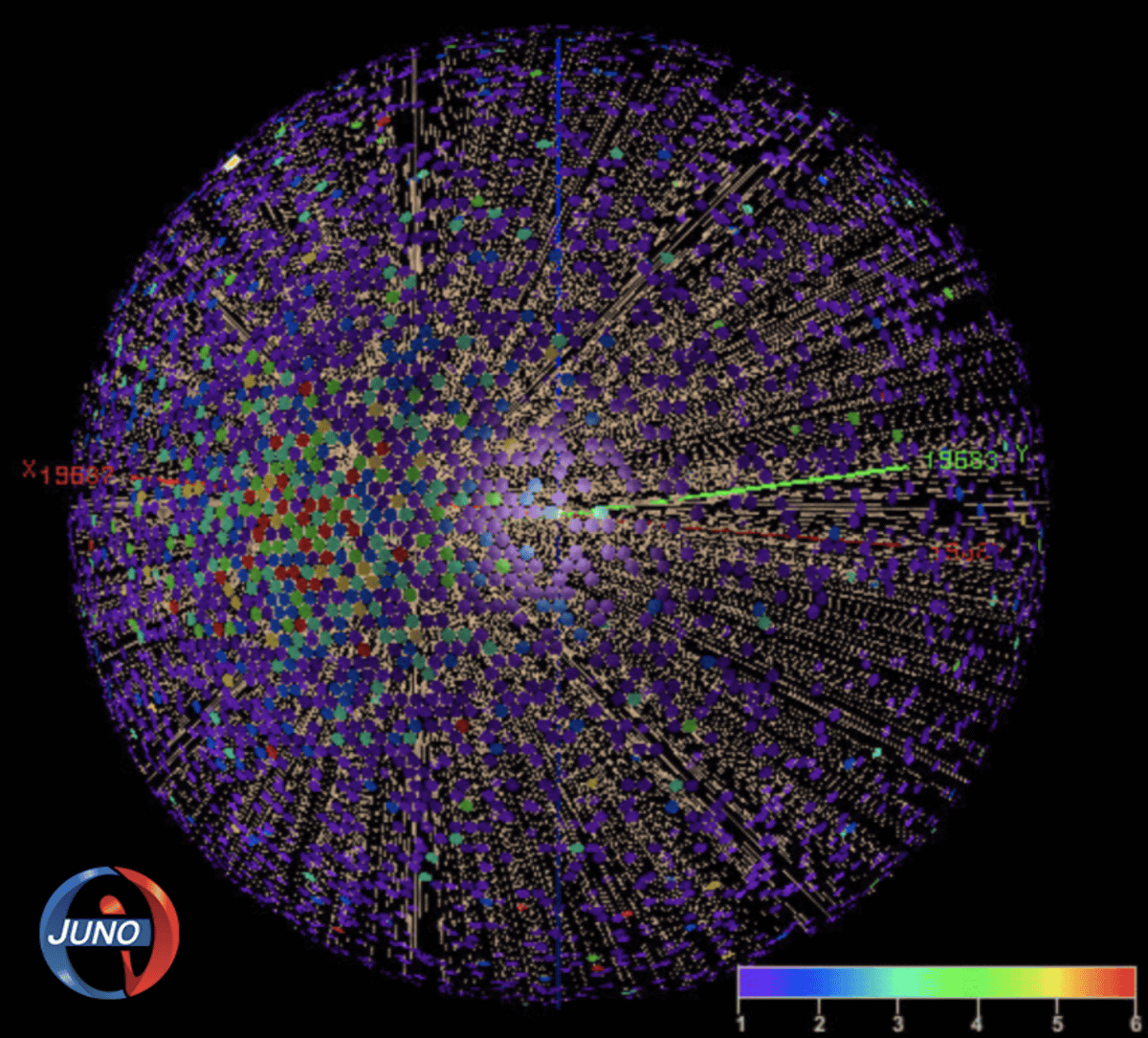
JUNO's primary goal is to determine the mass order of the three types of neutrinos, that is, to determine which neutrino mass state is the heaviest or lightest. These initial results demonstrate that JUNO has the extremely high energy resolution and detection sensitivity of 3% per MeV, as designed, and it is expected that over the next 30 years of operation, it will bring about groundbreaking discoveries in both particle physics and astrophysics, such as determining the mass order, searching for proton decay, and observing supernova neutrinos.
Related Posts: