What are the concerns about 'malfunctions caused by strong solar radiation' of the Airbus A320, which the manufacturer has requested to be suspended?
by
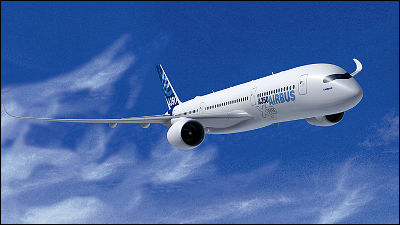
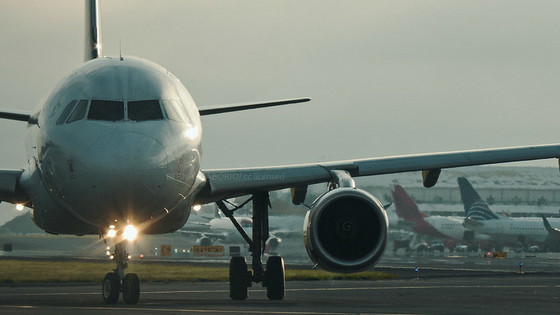
On November 28, 2025, European aircraft manufacturer Airbus urged airlines to suspend operations of itsA320 jetliner, citing concerns that 'intense solar radiation could corrupt data critical to flight control functions.'
A320 Family precautionary fleet action | Airbus
https://www.airbus.com/en/newsroom/press-releases/2025-11-airbus-update-on-a320-family-precautionary-fleet-action
6,000 Airbus Jets Grounded, Because Nobody Tested for the Sun | flyingpenguin
https://www.flyingpenguin.com/?p=74567
According to an Airbus press release, 'Analysis of a recent event on an A320 has revealed that intense solar radiation can corrupt data critical to flight control functions. As a result, Airbus has determined that a significant number of A320s currently in service may be affected.' The 'recent event' refers to an incident on October 30, 2025, in which an A320 operated by JetBlue, a US low-cost carrier, suddenly pitched its nose downward without pilot input, resulting in injuries to 12 passengers.
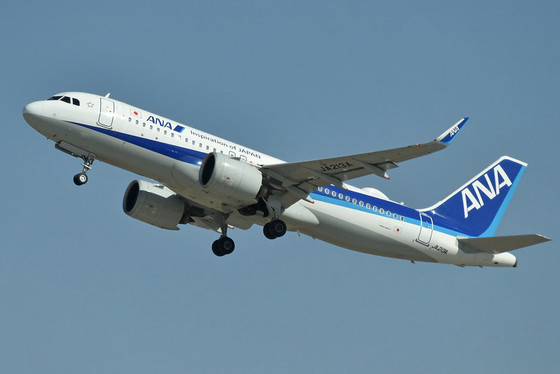
Airbus told The Guardian that of the 6,000 affected A320s, some aircraft required time-consuming hardware fixes rather than software fixes, but that fewer than the initial estimate of 1,000 aircraft required more extensive fixes. Airbus's suspension request resulted in the cancellation of some routes, and in Japan, All Nippon Airways (ANA) announced it would cancel 95 domestic flights on November 29, 2025, affecting approximately 13,200 passengers.
by
In a blog post , security company CEO David Ottenheimer pointed out that the malfunction caused by 'intense solar radiation' that Airbus cited was actually the effect of cosmic rays from the sun.
At altitudes of 10,000 to 13,000 meters, where passenger aircraft typically cruise, aircraft are exposed to cosmic rays at approximately 100 to 300 times the intensity experienced on the ground. Furthermore, when solar activity increases and flares occur, the amount of cosmic rays irradiated increases even more explosively. When these cosmic rays pass through semiconductors, the charge of the particles can flip bits in memory or logic circuits. This phenomenon, known as a single event upset (SEU), can have a significant impact on semiconductor devices.

by NASA/GSFC/TRACE
SEUs have caused aircraft malfunctions in the past. In October 2008, Qantas Flight 72, an Airbus A330 cruising at an altitude of approximately 11,200 meters above Western Australia, experienced two unintentional nose-down movements, injuring 119 passengers. An investigation by the Australian Transport Safety Bureau (ATSB) has suggested that cosmic rays may have been one of the causes of this accident, causing a bit flip in one of the Aviation Data Inertial Systems (AIDRS) due to an SEU.
Additionally, a ground training test to check the Boeing 737 MAX's flight control system reportedly resulted in a loss of control of the mock aircraft due to a bit flip during a simulated SEU.
According to an Airbus advisory, the cause of the problem lies in the flight control computer, ELAC B. ELAC B processes sensor inputs and calculates the position of control surfaces multiple times per second. If a value is corrupted by a bit flip during a calculation, such as an elevator deflection command, it could be output incorrectly. Ottenheimer pointed out that the latest version of the control software, L104, may not have performed this error check.
The European Aviation Safety Agency (EASA) issued an emergency airworthiness improvement order (PDF file) on November 29, 2025, instructing the ELAC BL104 to be downgraded to L103+ at the time of writing.
'Physics is working against us as transistors get smaller,' Ottenheimer said. 'When IBM researchers first described the mechanism of cosmic ray damage in 1979, transistors were measured in micrometers. Today, they're measured in nanometers, a thousand times smaller than they were then. The smaller the transistor, the less charge is needed to flip a bit. This means that particles that were harmless in 1979 can corrupt data on modern chips.'
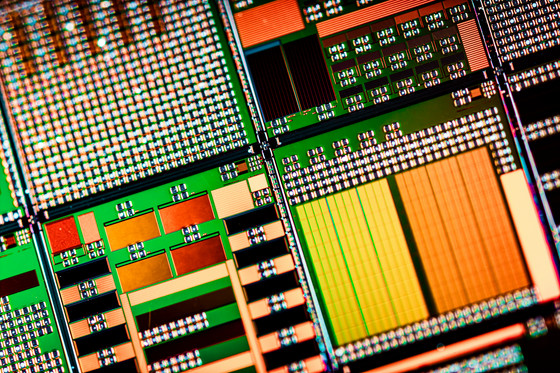
Safety-critical systems that require robustness employ SEU countermeasures such as redundancy, cross-checking by multiple computers, error-correcting memory, range checks for calculated values, and monitoring timers to detect abnormal conditions. However, if these countermeasures are left open, such as when a software update unintentionally weakens the defenses, physical environmental factors can affect the system in ways that designers did not anticipate.
Ottenheimer praised Airbus' response, saying, 'While this directive may seem inconvenient, it demonstrates that safety systems are working properly, identifying vulnerabilities and addressing them before another catastrophic outcome occurs.'
Related Posts: