Google DeepMind and Commonwealth Fusion Systems partner to accelerate fusion energy development with open-source plasma simulator TORAX
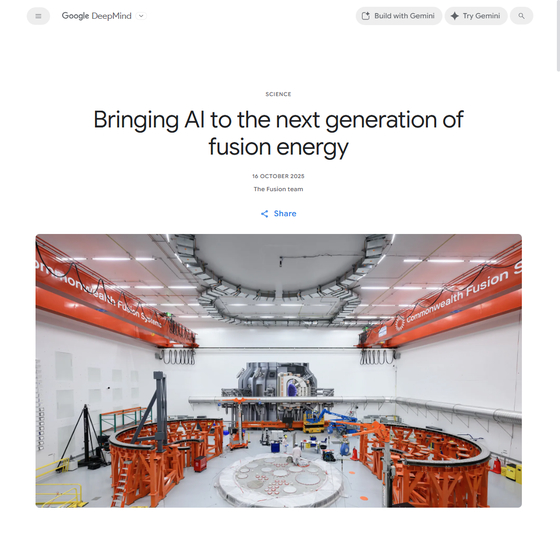
On October 16, 2025 local time, Google DeepMind, a Google AI research and development company, announced that it will use AI to develop next-generation nuclear fusion energy.
Bringing AI to the next generation of fusion energy - Google DeepMind
We're announcing a research collaboration with @CFS_energy , one of the world's leading nuclear fusion companies.
— Google DeepMind (@GoogleDeepMind) October 16, 2025
Together, we're helping speed up the development of clean, safe, limitless fusion power with AI. ⚛️ pic.twitter.com/5gDqP3WiNe
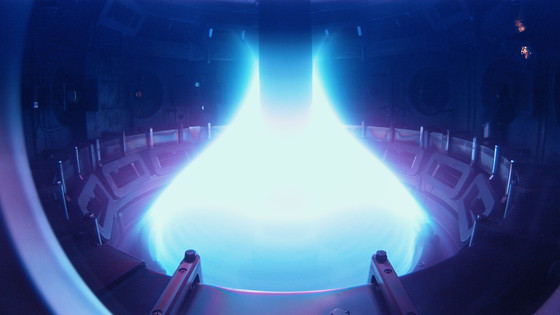
Fusion energy can produce clean, abundant energy without producing radioactive waste. For nuclear fusion to work on Earth, ionized gas called plasma must be kept stable at temperatures exceeding 100 million degrees. This is an extremely complex physics problem, and Google DeepMind has announced that it aims to use AI to solve it.
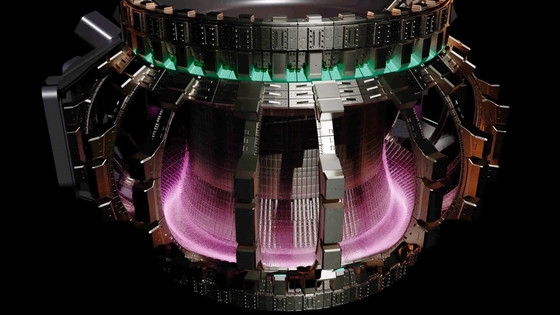
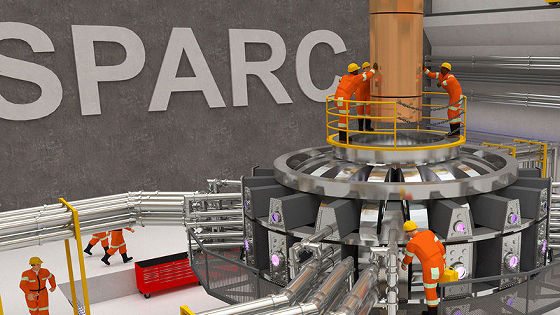
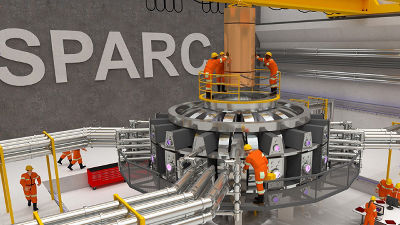
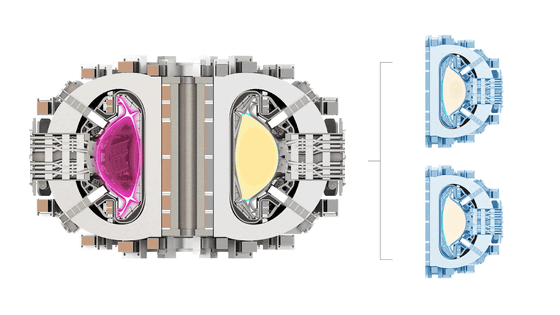
As part of this, Google DeepMind has announced a research partnership with Commonwealth Fusion Systems (CFS), a world leader in fusion energy, which Google DeepMind describes as 'using SPARC , a small and powerful tokamak fusion reactor, to pave the way quickly to clean, safe, and virtually limitless fusion energy.'
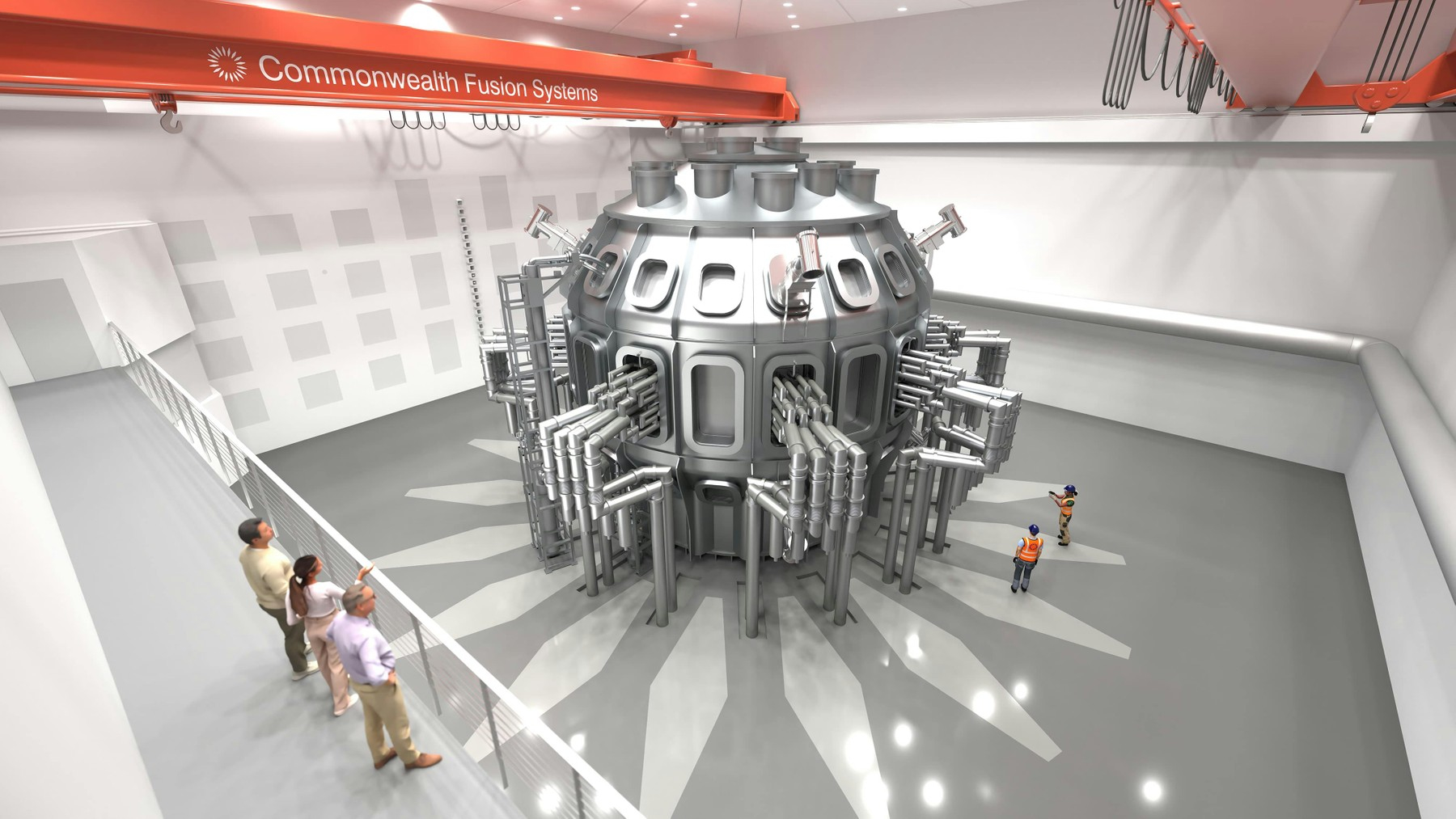
SPARC aims to develop the first magnetic fusion device capable of generating more energy from nuclear fusion than is needed to sustain it, by utilizing powerful high-temperature superconducting magnets, a significant milestone toward achieving practical fusion energy.
The partnership between Google DeepMind and CFS builds on groundbreaking research into the use of AI to control plasma . This research, published by Google DeepMind as an academic partner of the Swiss Plasma Center at the Swiss Federal Institute of Technology in Lausanne, demonstrated the use of deep reinforcement learning to control magnets in tokamak fusion reactors and stabilize complex plasma shapes.
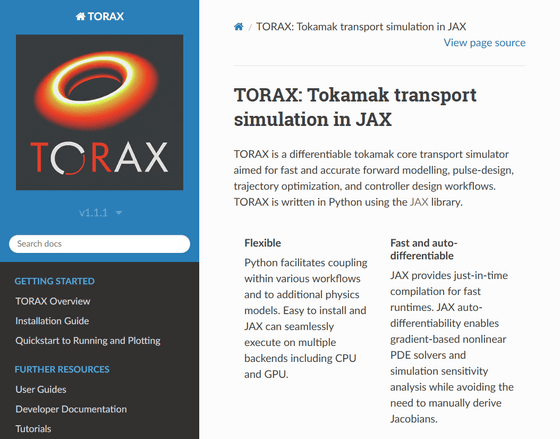
Using the results of this research, Google DeepMind developed TORAX , a high-speed, differentiable plasma simulator written in JAX that can cover a wider range of physical phenomena.
TORAX: Tokamak transport simulation in JAX — TORAX documentation
https://torax.readthedocs.io/en/v1.1.1/
By bringing TORAX into partnership with CFS, Google DeepMind explains that it will accelerate the timeline for delivering fusion energy to the power grid. Google DeepMind will collaborate with CFS in three areas: creating fast, accurate, and differentiable simulations of fusion plasma, finding the most efficient and robust ways to maximize fusion energy, and using reinforcement learning to discover novel real-time control strategies.
'The combination of Google DeepMind's AI expertise and CFS' cutting-edge hardware creates an ideal partnership to advance the fundamental discoveries of fusion energy for the benefit of the global research community and ultimately the world at large,' Google DeepMind explained.
To optimize the performance of a tokamak fusion reactor, it is necessary to simulate how heat, current, and matter flow through the core of the plasma and how they interact with surrounding systems. TORAX is an open-source simulator announced by Google DeepMind in 2024. TORAX expands the scope of physics challenges it tackles beyond magnetic simulations. Because TORAX is built on JAX, it can easily run on both CPUs and GPUs, smoothly integrating AI-powered models, including proprietary models , for even better performance.
TORAX will help the CFS team test and refine operational plans by running millions of virtual experiments before SPARC goes live, while also providing the flexibility to quickly adjust plans as the first data arrives. TORAX has therefore become a key part of CFS's daily workflow, helping to understand plasma behavior under a variety of conditions and saving valuable time and resources.
Operating a tokamak fusion reactor involves countless options for adjusting various factors such as magnetic coil current, fuel injection, heating power, etc. Manually finding the optimal settings for a tokamak fusion reactor to produce the most energy within its operating limits is highly inefficient.
Combining TORAX with reinforcement learning and evolutionary search approaches like AlphaEvolve enables Google DeepMind's AI agents to explore a vast number of potential operating scenarios in simulations and quickly identify the most efficient and robust paths for net energy production. This allows CFS to focus on the most promising strategies, increasing its success rate from day one, even before SPARC is fully operational and running at full power.
Google DeepMind is building infrastructure to explore different SPARC scenarios, and as we understand more about SPARC, we can explore maximizing fusion energy under various constraints, optimizing robustness, and more.
Demis Hassabis, CEO of Google DeepMind, expressed his joy at the partnership with Commonwealth Fusion Systems, saying, 'We are excited to work with Commonwealth Fusion Systems to use AI to accelerate the development of nuclear fusion and move closer to a sustainable future with limitless clean energy!'
Super excited to be collaborating with Commonwealth Fusion Systems @CFS_energy to use AI to accelerate fusion development - and move closer to a sustainable future with limitless clean energy https://t.co/kCS1UKEtjP
— Demis Hassabis (@demishassabis) October 16, 2025
Google will invest in CFS alongside Google DeepMind research to support its efforts to realize promising scientific and engineering breakthroughs, which will also advance Google DeepMind's efforts to commercialize its technology.
Google DeepMind stated, 'Our vision for the future goes beyond optimizing SPARC operations. We are building the foundation for AI to become the intelligent, adaptable systems at the heart of future fusion power plants. This is just the beginning of the partnership journey between Google DeepMind and CFS. We look forward to sharing more details about our collaboration as we achieve new milestones.'
Related Posts: