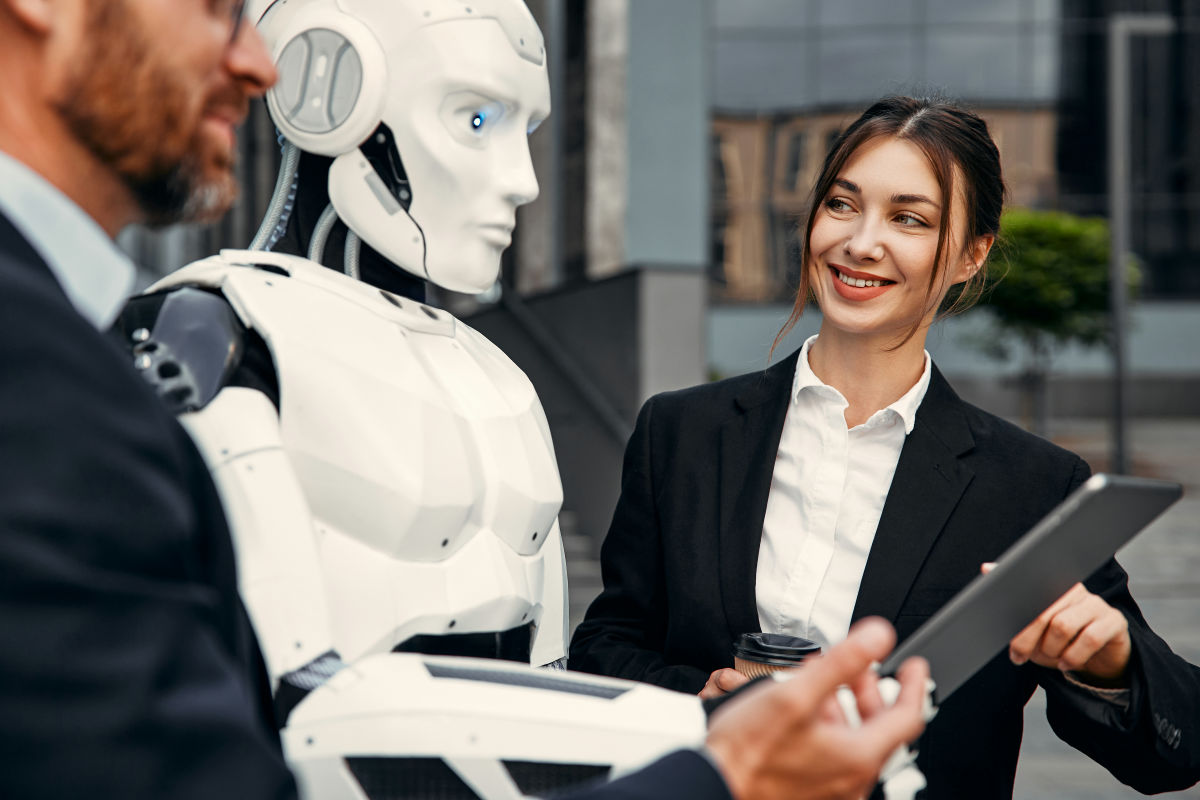
Experts point out that AI is merely a 'word calculator' and does not think or reason as users imagine
There are various metaphors to describe AI, such as the 'black box' and the 'parrot,' but one that is well-known is the 'language calculator' metaphor popularized by OpenAI CEO Sam Altman.
Actually, AI is a 'word calculator' – but not in the sense you might think
https://theconversation.com/actually-ai-is-a-word-calculator-but-not-in-the-sense-you-might-think-264494
Metaphors for AI help make complex technologies easier to understand by putting them into everyday terms. The linguistic calculator metaphor for AI suggests that generative AI will process large amounts of linguistic data, just as a small plastic calculator can help with complex calculations.
However, the analogy of AI as a word calculator has been criticized for obscuring the troubling aspects of generative AI: calculators have no built-in biases and are not prone to errors or ethical dilemmas, but generative AI is unavoidable.
But Mirak points out that it's dangerous to completely reject this metaphor, because generative AI is essentially a language calculator. 'The computations in generative AI tools are designed to mimic the computations that underlie everyday human language use,' he says.
Many people don't think of their verbal interactions as statistical. However, there are social rules that govern the choice and order of words, such as not saying 'kosho salt' instead of 'shio pepper' (salt and pepper) or saying 'ocha koi' (strong tea) instead of 'ocha koi' (strong tea), even if the words are likely to have the same meaning.
Common word combinations or sequences, also known as 'collocations,' are perceived as more natural the more often we see them in writing or hear them spoken, while other ways of speaking seem unnatural or unconvincing.
One of the central achievements of generative AI using large-scale language models is that it can formalize these collocations in a way that effectively deceives human intuition. By calculating statistical dependencies between tokens representing words and symbols in an abstract space that maps meanings and relationships, generative AI can generate sentences that not only pass
Generative AI excels at linguistic computation because of its linguistic roots. Modern large-scale language models trace their roots to machine translation tools designed to translate Russian during the Cold War. However, with the development of linguistics by
The development of machines that process natural language began with attempts to mechanize the rules of language, including grammar, then moved through statistical approaches that measured the frequency of word sequences based on limited data sets, and arrived at modern models that use neural networks to generate fluid language. However, although the scale and form have changed immeasurably, modern AI tools are still statistical systems of pattern recognition, Miraak points out.
So, while generative AI can very well verbalize human knowledge, behavior, and emotions, it does not directly experience or feel these phenomena—it simply generates statistically plausible strings of letters and words.
When describing generative AI, AI developers tend to use words like 'thinking,' 'inference,' and 'exploration' rather than 'calculation,' leading many users to believe that the AI is thinking and inferring in the same way as they do. However, while generative AI can actually calculate that 'the words 'I' and 'you' tend to be used together with the word 'like,'' it does not actually understand the concepts of 'I,' 'you,' and 'like.'
'Generative AI is always just calculating. It shouldn't be mistaken for anything more than that,' Mirak said.
Related Posts:







in Software, Web Service, Science, Posted by log1h_ik