Study finds that adults diagnosed with ADHD use less antidepressants

ADHD is a neurodevelopmental disorder characterized by inattention, hyperactivity, and impulsivity, and symptoms often persist into adulthood. A large study in Finland showed that adults diagnosed with ADHD tended to reduce their use of antidepressants after their diagnosis.
Use of Antidepressants Decreased After Initiation of ADHD Treatment in Adults—A Finnish Nationwide Register Study Describing Use of ADHD and Non‐ADHD Medication in People With and Without ADHD - Westman - 2025 - Acta Psychiatrica Scandinavica - Wiley Online Library
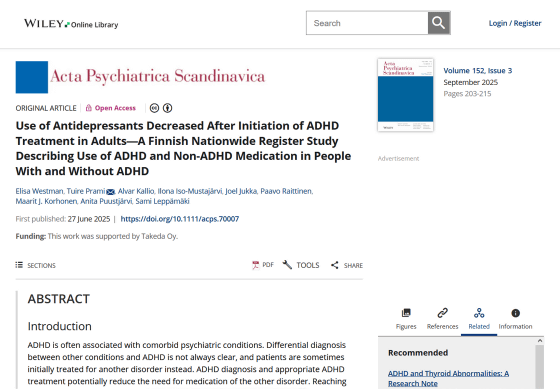
Antidepressant use declines in adults after ADHD diagnosis, large-scale study indicates
https://www.psypost.org/antidepressant-use-declines-in-adults-after-adhd-diagnosis-large-scale-study-indicates/
Many adults with ADHD have long-term difficulties with concentration, task performance, and emotional regulation, and are sometimes misdiagnosed as depression or anxiety. As a result, they may be prescribed antidepressants or anti-anxiety medications before the underlying problem, ADHD, is identified.
Researchers at Oriola , a Finnish pharmaceutical company, therefore investigated how treatment for ADHD affects the use of medications for other conditions.
'There is a lively public debate going on, especially in Finland, about the increasing diagnosis and use of medications for ADHD,' said Tuire Prami, senior scientist at Oriola and co-author of the paper. 'We wanted to find out more about what treatments people with ADHD received before their diagnosis and what medications they used afterward in a nationally representative population, and compare these results with those of a control group.'

The research team used Finland's nationwide registry data to identify people newly diagnosed with ADHD between 2015 and 2020. They then confirmed ADHD status using medication prescription data, diagnosis codes, and insurance records. To compare ADHD patients with a control group, each ADHD patient was matched with up to four non-ADHD subjects who matched their age, gender, and residential location.
The research team tracked the medications purchased and taken by subjects, including a total of more than 66,000 ADHD patients and more than 256,000 control subjects, from 2010 to 2021. They also investigated how ADHD patients' medication purchasing patterns changed before and after they were diagnosed with ADHD.
The results showed that many adults with ADHD were taking antidepressants before they were diagnosed with ADHD, and that these patients significantly reduced their antidepressant use after starting treatment for ADHD.
'This trend was not observed in the control group, suggesting that people taking antidepressants for ADHD may have reduced their antidepressant use as a result of starting to treat the underlying ADHD. In other words, there may have been many adults being treated for depression or anxiety disorders despite the underlying cause being undiagnosed ADHD.'
A similar pattern was observed for children with non-psychiatric medications: Before diagnosis, children with ADHD were more likely than their peers to be prescribed antibiotics, anti-inflammatory drugs, and asthma medications, but once ADHD treatment began, their use of these medications declined sharply compared with the control group.

Patients with ADHD were more likely to have been prescribed medications such as antiepileptics, antipsychotics, sleep aids, melatonin, and medications for acid reflux before their diagnosis, supporting the idea that patients with ADHD take a variety of medications to alleviate the mental and physical pain of living with undiagnosed ADHD.
'Diagnosis of ADHD can be difficult, especially in adults, where diagnosis is delayed and they may first be treated for symptomatic relief or other suspected conditions such as depression,' Prami said.
Related Posts:







in Science, Posted by log1h_ik