The 'pretend work company' business, where people go to the office and pretend to be working, is becoming popular in China

Chinese college graduates
Beijing “Fake Shangban Company” launches, reporter reality track: True Shangban!
https://xinwen.bjd.com.cn/content/s6805cd91e4b0ec1c3d960eba.html
Going to an office and pretending to work: A business that's booming in China | International | EL PAÍS English
https://english.elpais.com/international/2025-05-31/going-to-an-office-and-pretending-to-work-a-business-thats-booming-in-china.html
According to a report by Beijing Youth Daily, 'pretend work companies' have started to appear in urban areas such as Beijing and Shanghai, advertising that they provide office environment, Wi-Fi, all-you-can-drink drinks, lunch, etc. for 30 to 50 yuan (about 600 to 1000 yen) a day. The main targets are unemployed people who want temporary office space, entrepreneurs who are recruiting, housewives who want a simulated work experience, and freelancers who can't get work done at home.
At first glance, they appear to be just shared office rentals, and some people are actually using them for that purpose. However, for people who are afraid of their families finding out they are unemployed at home, some are advertising free photo-taking services for their attendance records, services such as supervisors visiting the workplace, and services to issue employment certificates to fill in gaps in their resumes, reports the Beijing Youth Daily.
According to the National Bureau of Statistics of China, the urban unemployment rate in the first quarter of 2025 was 5.3%. However, the unemployment rate among young people is by far the highest, with the unemployment rate for 16-24 year olds (excluding students) reaching 16.5% in March 2025. In this situation, numerous advertisements for 'pretend work companies' have been posted on the Chinese social networking site Xiaohongshu, and have been viewed millions of times.
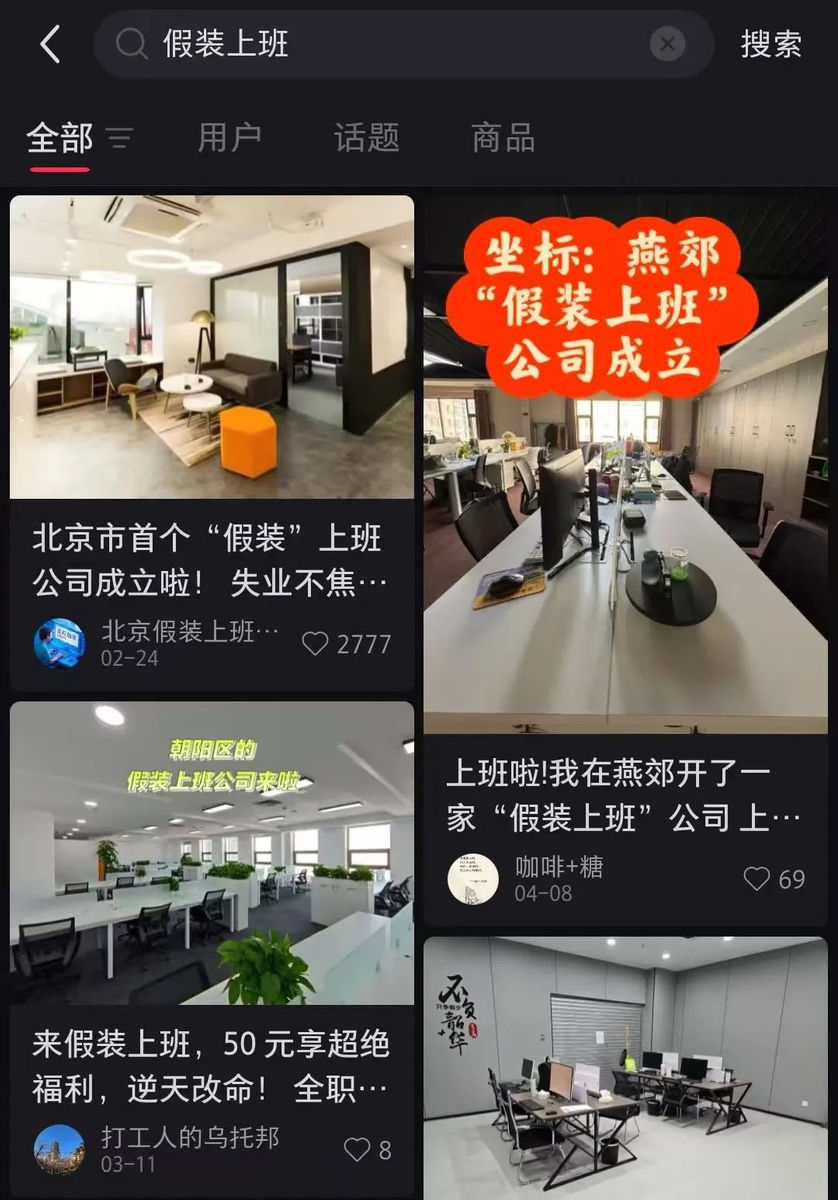
Businesses quickly sprang up to jump on this trend on the Internet. For example, the 'Pretend Work Company' in Shuangjing, Beijing, is equipped with basic office facilities such as desks, networks, and printers, creating a quiet and orderly workplace atmosphere. There, people are working seriously at their PCs, others are leaning back in their chairs looking at their smartphones, and children are playing games.
This 'pretend work company' is an unused office belonging to a law firm. Since lawyers have a lot of freedom in their work and don't use the workspace very often, the firm rents out the office for a short period of time in order to reuse the unused workstations.
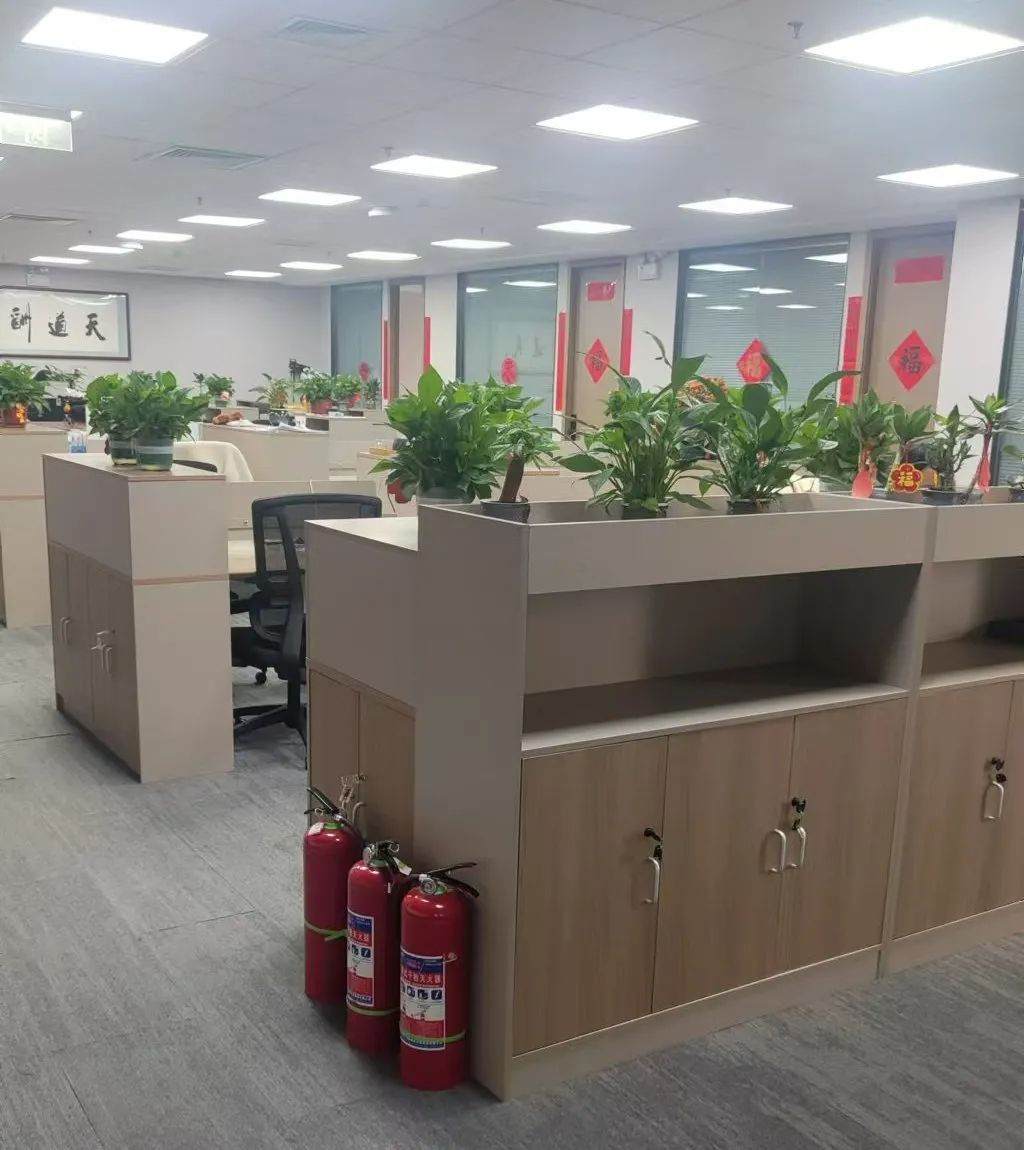
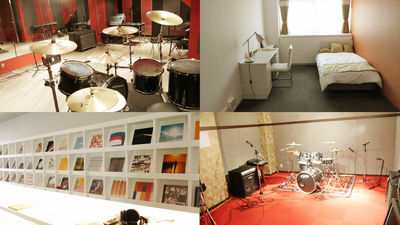
Another 'pretend work company' in eastern Beijing is actually a live-streaming company studio, equipped with a live-streaming room and costume and prop rooms in addition to workstations. Employees say the company is calling itself a 'pretend work company' to capitalize on the trend and utilise idle space, while also raising its profile.
An employee said, 'We are well aware of the problems that many startups face. Traditional office buildings often require annual rent, which is a heavy burden for entrepreneurs. As a self-media company, we offer flexible lease plans on a daily or weekly basis, but our main business is still self-media operation and live streaming.'
One that stands out among these 'pretend work companies' is one on the outskirts of Beijing, whose office space is set on a farm amongst a row of plastic greenhouses for fruit and vegetables.
Here, not only can people work remotely while enjoying the sunlight, but they can also actually experience farm work such as digging in the soil and harvesting. Many of the users are freelancers and people looking for work.
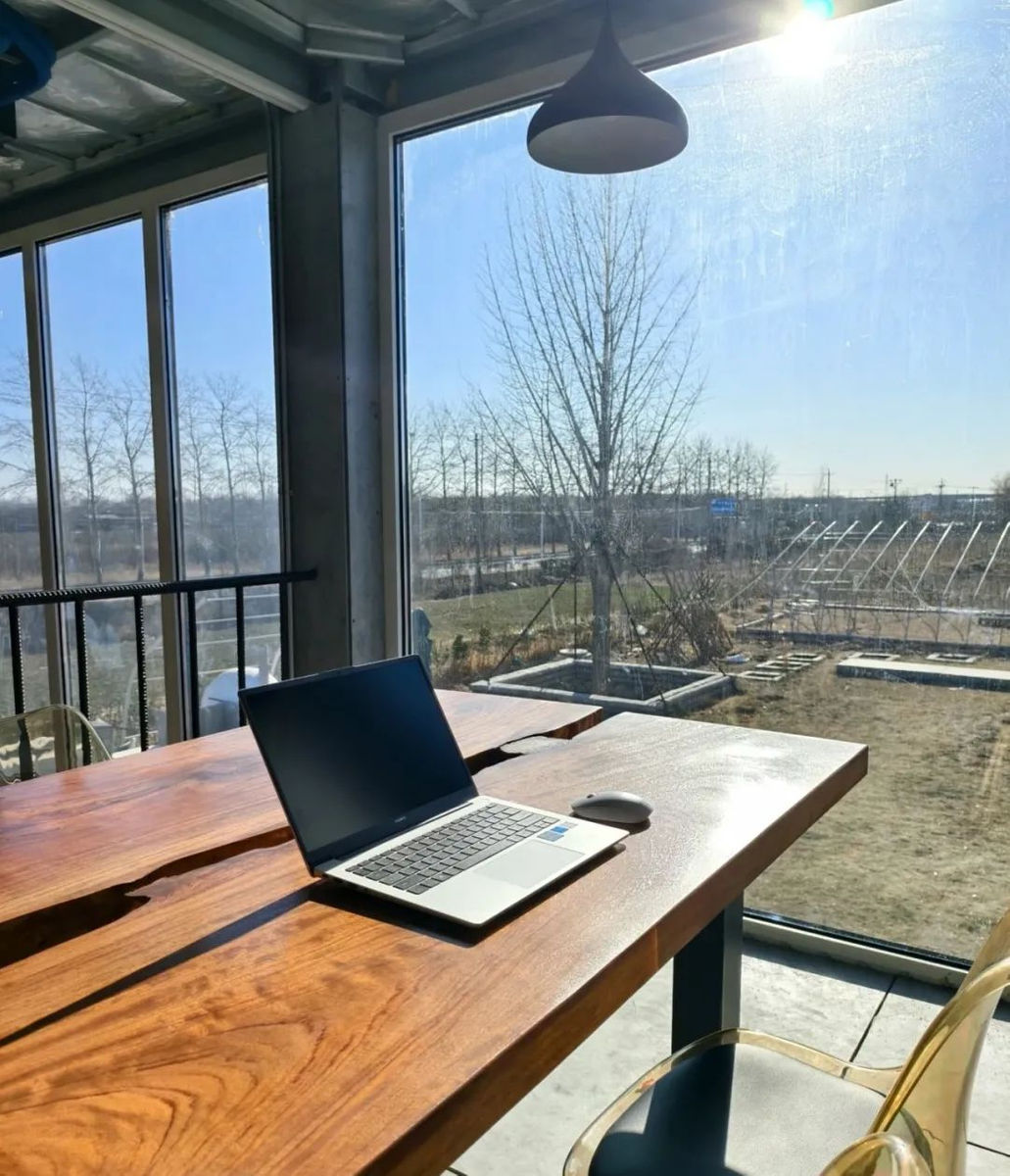
Inspired by reading a book about unemployed people during Japan's period of economic development, Benran opened a corner of his farm to start a 'pretend work company.' He said he hopes the place will become an office for office workers and a temporary place of rest for the unemployed.
Related Posts:






in Note, Posted by darkhorse_log