How much will tariffs cost Americans to buy Nike sneakers?
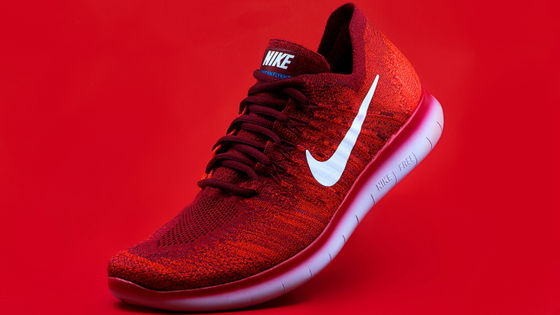
The future remains uncertain, with US President Donald Trump announcing on April 9, 2025 that he will suspend the tariffs that were just implemented that day for 90 days. The global economy is at the mercy of President Trump's decisions. In this situation, attention is often focused on food costs , which are directly related to daily life, and the prices of digital products, which are greatly affected by tariffs, but the distribution of shoes will also be affected to some extent. Derek Guy , a writer who specializes in menswear, explains the manufacturing costs of Nike sneakers made in Asia and the impact of tariffs.
How much do you think it costs to make a pair of Nike shoes in Asia?
— derek guy (@dieworkwear) April 8, 2025
I'll show you. 🧵 pic.twitter.com/1JI0Wa96SU
Steve Bence, Nike's program director for footwear sourcing and manufacturing, said in a 2014 interview that if a sneaker retails for $100, it typically costs about $25 to make.
In 2014, Steve Bence served as Nike's Program Director in Footwear Sourcing and Manufacturing. He pulled back the curtain on manufacturing in an interview with Portland Business Journal. He said that, if a sneaker retails for $100, it generally costs them about $25 to manufacture pic.twitter.com/VQxBijM6sx
— derek guy (@dieworkwear) April 8, 2025
According to Guy, this is calculated on a transaction called ' free on board (FOB) ,' which means that the factory pays the cost up until the time the product is loaded onto the ship.
This is the FOB cost. In the industry, 'free on board' is the shoe's cost at the point when it's loaded onto a vessel at the port of origin. 'Free' refers to how the factory will pay to deliver a finished product up to the point when it boards a ship—the rest is your problem. pic.twitter.com/IWDPMiR4fI
— derek guy (@dieworkwear) April 8, 2025
Tariffs are calculated based on the import declared price, so if NIKE paid $25 for a pair of sneakers and was hit with the 104% tariff that the government announced it would impose on China, the tariff would be $26, and the 'landed price' when imported into the U.S. would jump to twice the original price. Some people may think that $25 in manufacturing costs and $26 in tariffs are deducted from the $100 retail price, so that's not a big deal, but manufacturing costs and tariffs aren't the only costs.
'OK,' you say, 'so that leaves them with a $49 profit. $100 retail minus $25 manufacturing cost and $26 tariff. That's still good.'
— derek guy (@dieworkwear) April 8, 2025
Not so! There are other costs associated with getting that shoe into your closet. You are not collecting that sneaker at the port.
Sole Review, a shoe review site, estimated the cost of a $100 shoe from Nike's profit and loss statement in 2016. According to the results, the manufacturing cost of a $100 shoe is $22 (about 3,212 yen), and when freight, insurance, and import taxes are added to that, it costs $27 (about 3,942 yen) to bring a shoe from Asia to the United States. In this case, Nike's profit is $5 (about 730 yen).
In 2016, Sole Review took a look at Nike's income statement and came up with this breakdown. On an imaginary $100 shoe, they estimate manufacturing cost is $22. Add freight, insurance, and import taxes, they estimate it costs Nike $27 to bring that shoe from Asia to the US. pic.twitter.com/MzcJd7jBNV
— derek guy (@dieworkwear) April 8, 2025
Sole Review also estimated that Foot Locker's profits, minus expenses, are $6 for every $100 pair of shoes sold, citing documents submitted to the government by the major American sneaker retailer. Nike also sometimes sells sneakers directly, but incurs similar expenses in that case.
They also looked at Footlocker's income statement/ 10k filing and came up with this model. On the same imaginary $100 shoe, Footlocker makes $6 after expenses.
— derek guy (@dieworkwear) April 8, 2025
Of course, Nike can retail the shoes themselves, but then they'll also take on similar business costs. pic.twitter.com/D1NnFTAsWp
Guy points out that there are three things we can learn from this model: First, because of costs and retailer profits, adding a $26 tariff doesn't necessarily mean the final price will go up by $26.
Assuming that 'NIKE imports shoes for $25, sells them to Foot Locker for $50, and Foot Locker sells them in stores for $100,' if the tariff rises to $26 and the total cost, including freight and insurance, jumps to $28 (about 4,088 yen), NIKE will need to wholesale shoes to Foot Locker for $75 (about 10,950 yen). And since Foot Locker's purchasing costs will also increase by that amount, the final retail price will be $150 (about 21,900 yen).
But if we bump the cost of freight, insurance, and customs from $5 to, say, $28, then they wholesale the shoes to Footlocker for about $75. And if Footlocker purchases Nike shoes for $75, then they retail them for $150. Everyone needs to fixed percentages to avoid losses. pic.twitter.com/SW6Ms2yicH
— derek guy (@dieworkwear) April 8, 2025
Secondly, just because Nike shoes are produced in Asia doesn't mean that all the jobs Nike creates in the US are lost to Asia. 'A pair of $100 shoes you can buy at Foot Locker creates jobs for Foot Locker employees, Nike's designers and marketing teams, and Americans working throughout this supply chain,' Guy explains.
The second thing we see is that Asian manufacturing in Asia produces US jobs. You go to Footlocker to buy a pair of $100 shoes because you can afford them. This creates jobs for the Footlocker employees, Nike designers, marketing teams, and other US people throughout this chain. pic.twitter.com/sI6YGx8eMa
— derek guy (@dieworkwear) April 8, 2025
The third point is that NIKE only pays $25 to the factory that makes $100 sneakers. The breakdown of the $25 is unclear, but Guy says it's reasonable to assume that the factory's production costs are around $12.50 (about 1,825 yen). If that's the case, the wages paid to factory workers will be even lower.
The third thing we see is that Nike only paid the factory about $25 to make these sneakers. How much did it cost the factory to produce them? I don't have numbers on that, but if we assume the usual turnkey model, then maybe $12.5? And how much of that went to the worker? pic.twitter.com/GElq9ed4IY
— derek guy (@dieworkwear) April 8, 2025
However, it's too early to label this as exploitative labor. 'The cost of living is different in the U.S. than overseas, so even if you produce ethically, it can still be relatively cheap,' Guy explains. 'I'd like people to get rid of the idea that all Asian workers are slaves.'
Again, it's a popular misconception that all overseas production is sweatshops. Production can be done ethically abroad and still be relatively cheap because the cost of living is not the same everywhere. I encourage you to note assume that every Asian worker is a slave.
— derek guy (@dieworkwear) April 8, 2025
If the sneakers were made in the United States, the retail price would be about $220 (about 32,120 yen). Moreover, 30% of the materials are imported from overseas, so if the tariff rate increases, the price will increase accordingly.
We have some idea of how much it would cost to make sneakers in the US. Victory/ Hersey (before they closed), SAS, and certain New Balances are made here. They retail for about $220.
— derek guy (@dieworkwear) April 8, 2025
Note, many of these rely on imported materials (up to 30%). So they will go up with tariffs. pic.twitter.com/A2Qy83lZxD
In his final post, Guy said, 'I brought this up because I've seen people argue that Nike makes sneakers in sweatshops in Asia for $2 a pair, sells them in stores for $150, and makes $148 a pair. If they bring this money back to America, American workers should get a cut of that money. But the truth is more complicated. Overseas production creates some jobs by providing a more affordable product. If sneakers go up to $220 and consumption falls at home and abroad, ultimately American jobs will fall.'
I think the truth is much more complicated. Manufacturing overseas can create certain jobs here by offering a more affordable product. In the end, you may actually see a *loss* of US jobs as fewer people pay for $220 sneakers, both at home and abroad. pic.twitter.com/yyTrjaWvB1
— derek guy (@dieworkwear) April 8, 2025
Related Posts:

in Note, Posted by log1l_ks