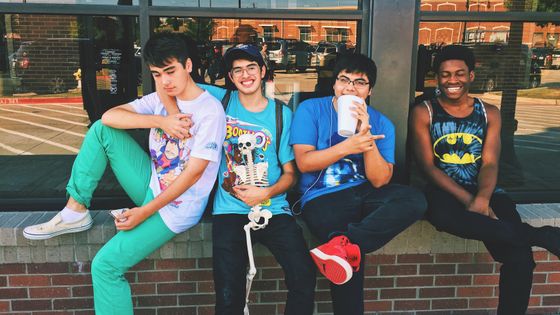
The root cause of the youth mental health crisis is a loss of community, but what exactly is 'community' and why do kids need real-world community?

Seth Kaplan, a professor at the Johns Hopkins School of Advanced International Studies, called for a 'real-world community' to address youth mental health issues.
The Upstream Cause of the Youth Mental Health Crisis is the Loss of Community
The three most commonly cited causes of the worsening mental health of young people are 'declining play,' 'the presence of smartphones in childhood,' and 'loss of community.' Kaplan argues that 'declining play' and 'harmful effects of smartphone addiction' are caused by 'loss of community,' and that 'loss of community' is the root cause.
Kaplan explained what the word 'community' refers to:
A mutually reinforcing web of overlapping, emotionally charged associations and relationships
A set of shared values, norms, and goals: a common culture that provides unity and constraints
A common identity, ideally based on a common history and narrative, and a recognition of interdependence
A shared ritual that celebrates the group, its past, and its future
・High reliability
High level of commitment, limited exit options or high exit costs
Recognizing and respecting a common authority that guides group decision-making
- Keystone actors and organizations that bridge and connect various members
Diverse skills and personalities who can offer complementary value to the group, such as money, time, or expertise
Role models who demonstrate cultural behaviors that a group should ideally emulate or at least aspire to.
Actively include all members who share the same identity or location, demonstrating a high level of inclusivity.
The ability to strongly encourage certain standards of behavior through moral suasion and punish misconduct when necessary.
As the list suggests, belonging to a community means giving up some of your freedom in exchange for safety and support, and giving up freedom is hard for modern people to accept, making it difficult to create a community.

Children's knowledge and attitudes are not taught directly by adults, but are developed through their interactions with people they meet at school and in their neighborhoods. For example, when adults and older children in their neighborhood show each other kindness, generosity and responsibility, children learn what kind of standards they should aspire to.
Kaplan points out that neighborhood-based communities are 'durable and robust' and cannot be replaced by online communities, such as those built on social media. Online communities don't necessarily provide support when you need it, nor do they offer protection when you're vulnerable. Furthermore, online communities often lack the dense social networks and informal, supportive daily interactions that neighborhood communities provide, acting as a comfort blanket in times of need.
Of course, this doesn't mean that online communities are worthless. They have the advantage of strengthening real-world relationships and groups, and connecting people who would never have met otherwise. 'What each community offers is irreplaceable, and we need to clearly recognize their limitations,' Kaplan said.
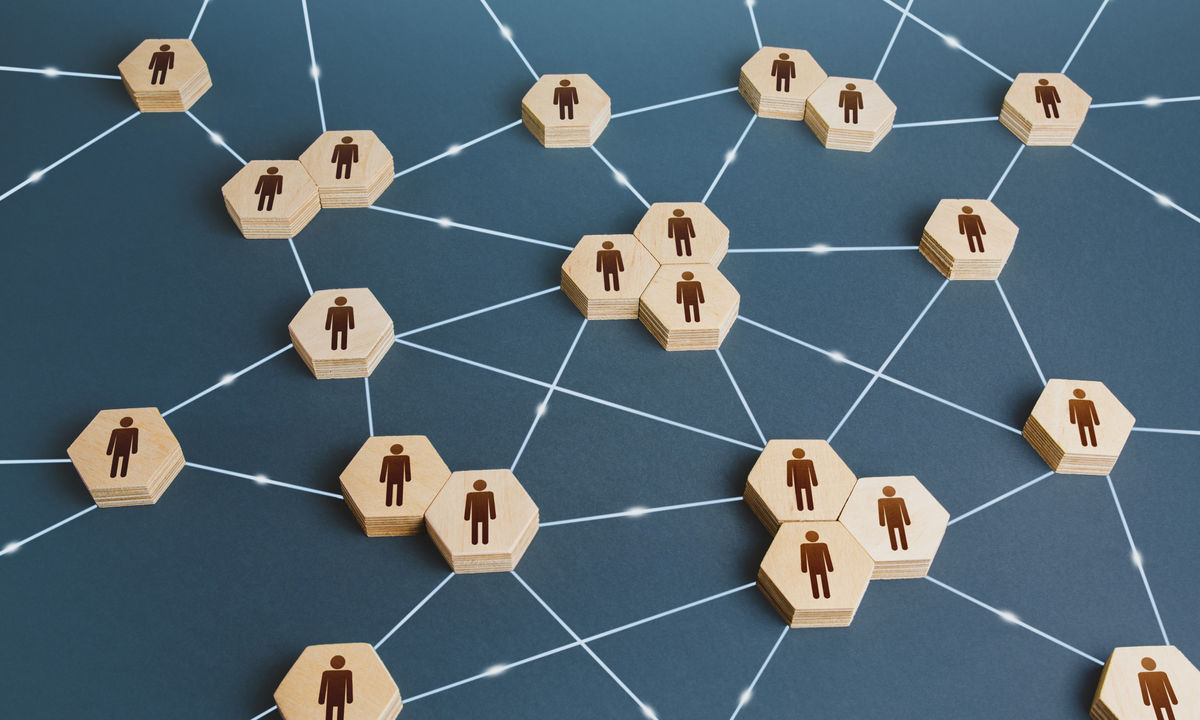
Kaplan adds, 'If you're a parent and you want to join or build a community that engages your children, it's important to choose a place to live based on social wealth, get involved in neighborhood organizations and activities, and spend time in places where local people congregate, and build your neighborhood community by utilizing organizations like schools, libraries, and local businesses.'
While it's important to deepen discussions about young people's use of social media, it's also important to recognize the strength of local communities when doing so. Kaplan concluded in her blog that 'if kids have strong, real-world, face-to-face relationships, they're less likely to become addicted to virtual worlds and less likely to fall into a mental health crisis.'
Related Posts: