Astronomers invent a way to spot AI-created deepfakes using a galaxy measurement tool
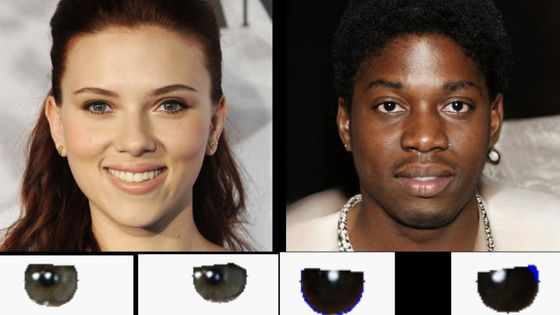
by Adejumoke Owolabi
As generative AI becomes more widespread, there is a growing demand for methods to identify
Want to spot a deepfake? Look for the stars in their eyes | The Royal Astronomical Society
https://ras.ac.uk/news-and-press/news/want-spot-deepfake-look-stars-their-eyes
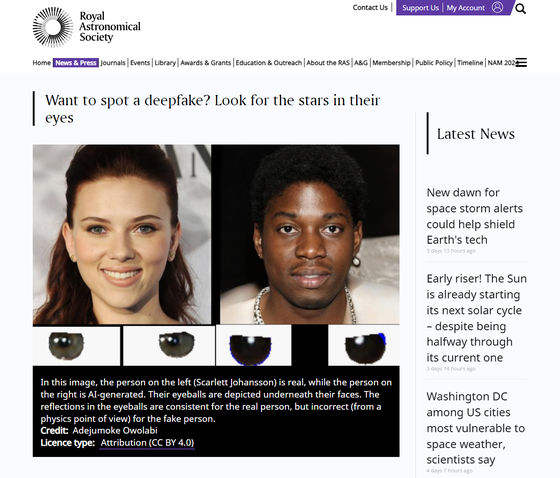
Astronomers discover technique to spot AI fakes using galaxy-measurement tools | Ars Technica
https://arstechnica.com/information-technology/2024/07/astronomers-discover-technique-to-spot-ai-fakes-using-galaxy-measurement-tools/
Adejumoke Owolabi, a Master's student at the University of Hull, working under the supervision of Professor of Astrophysics Dr. Kevin Pimbread, has presented a new method for detecting deepfake images by analyzing the reflections of the human eye. The research was presented at the 2024 National Astronomy Conference in the UK in the third week of July 2024.
The deepfake detection technology presented by Owolabi and his team is based on the simple principle that a pair of eyes illuminated by the same light source will typically show similarly shaped reflections of light in both eyes.
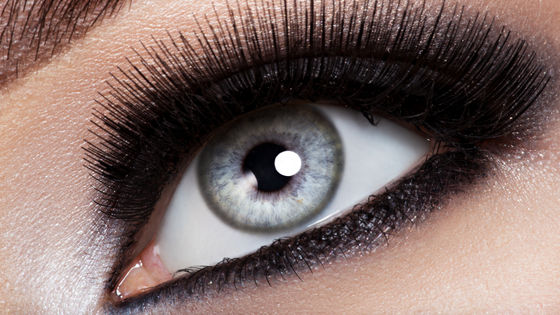
The photo below shows both human eyes, and you can see that the left and right eyeballs reflect light in almost the same way.
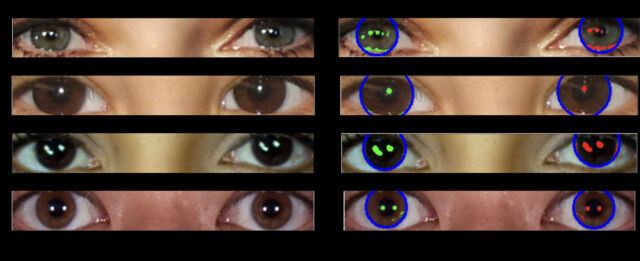
Owolabi explained that he developed a tool to automatically detect the reflections of light from the left and right eyes, and compared the similarities in the reflections seen in the left and right eyes by applying the morphological characteristics of the reflections as an index. He also explained that in deepfakes, the shapes of the reflections of light from the left and right eyes are often different.
Below are the left and right eyeballs of the deepfake. You can see that the way light is reflected is clearly different between the left and right eyeballs.
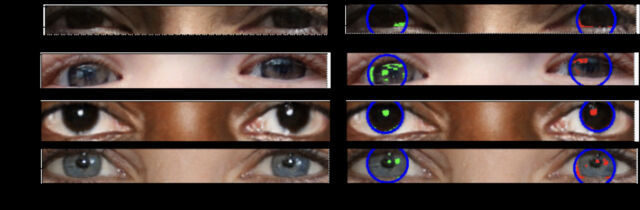
Owolabi's tool uses a technique used in astronomy to quantify and compare the reflection of light from the eye. Specifically, he uses
'We compared the method of measuring the shape of light reflections in the eye with the technique used to measure the shape of galaxies in telescope images,' said Dr Pimbread. 'To measure the shape of a galaxy, we analyse the distribution of light to determine whether it has a compact centre, whether it is symmetrical, how smooth it is, etc.'
The research team also investigated a method using CAS parameters, another tool used to measure the distribution of light in galaxies, but this method was not very effective in detecting deep fakes.
Regarding the technology to distinguish deep fakes from the way light reflects off the eyeball, technology media Ars Technica points out that 'This method may not work if the AI model evolves to be able to reproduce physically accurate eyeball reflections. Also, to use this technique, high-quality images that clearly show the eyeball are required.'
In addition, even in real photos, there is a risk of false positives because the reflection of light on the left and right eyes may not match due to differences in lighting conditions or post-processing techniques. However, Ars Technica pointed out that analyzing the reflection of light on the eyes may be more useful than methods that detect deep fakes based on consistency of hair texture, anatomical structure, skin, and background.
'There will be false positives and false negatives, so it won't be able to spot everything accurately,' Dr. Pimbread said. 'But this method provides a basic plan of attack in the arms race to detect deepfakes.'
Related Posts:





in Free Member, AI, Software, Science, Posted by logu_ii