A report from the Machi★Asobi Talk event, where the unique animator Ohira Shinya talked about his past work. Animators sometimes need to ignore the setting and scenario to create their own unique style.
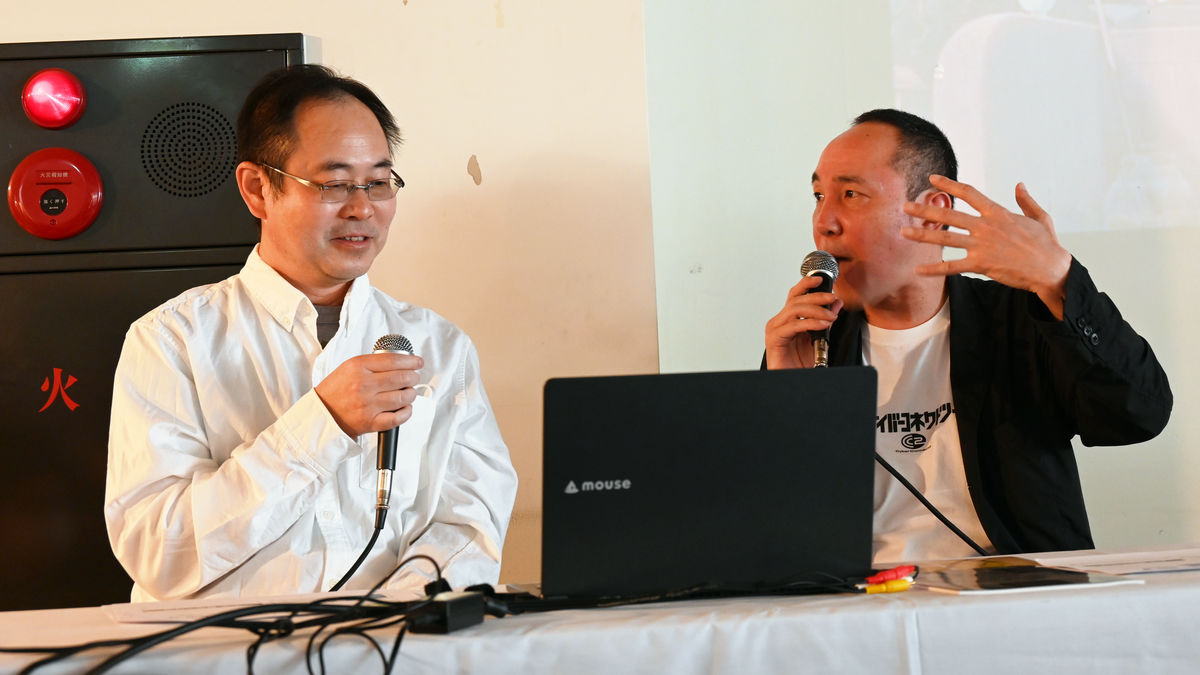
Animator and director Ohira Shinya, who has received high praise both domestically and internationally for his unique and powerful depictions, spoke about his work at the ' Animator Ohira Shinya Talk Event! - Looking back on all his work ' held at
Machi Asobi
https://www.machiasobi.com/
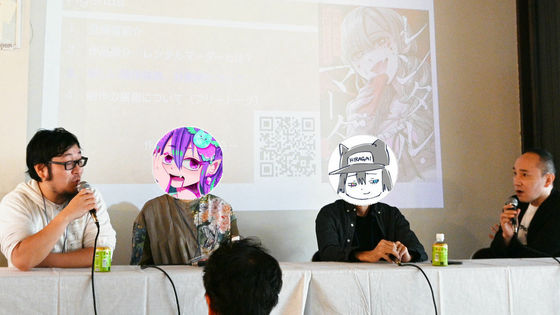
The event took place in the cafe space at the entrance to ufotable CINEMA, and was open to the public for free.

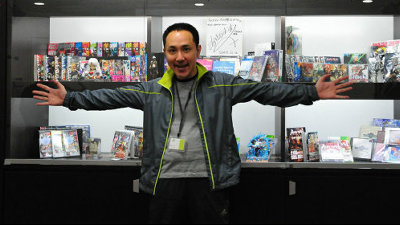
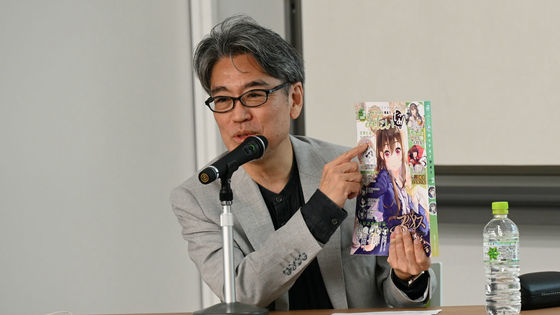
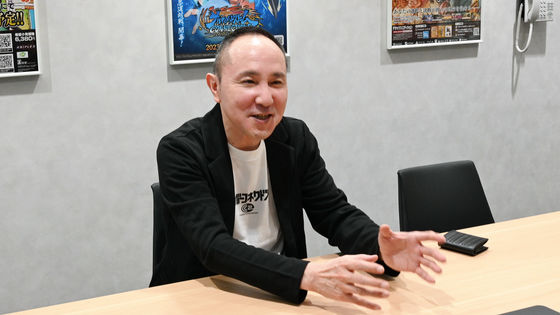
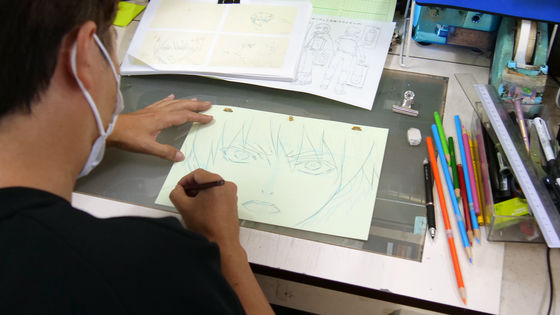
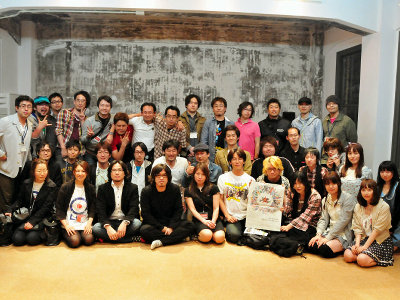
Shinya Ohira and moderator
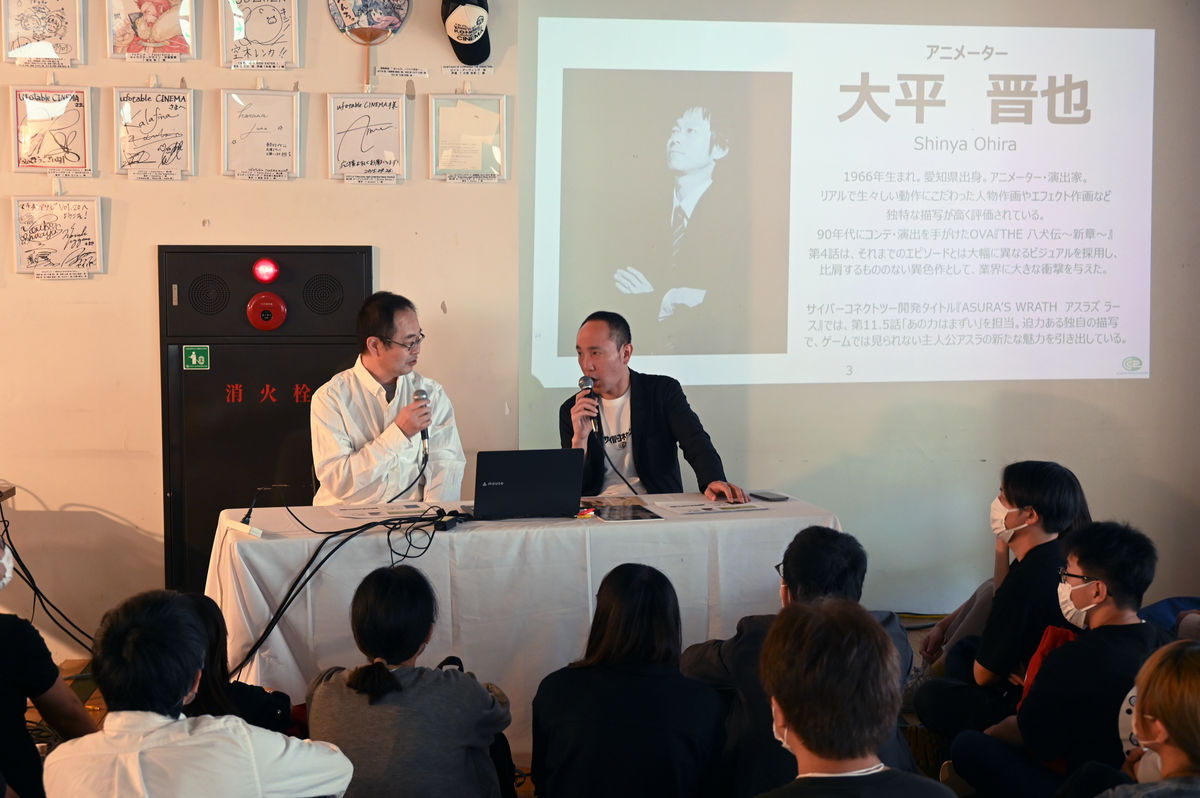
Below is a rough summary of the exchanges that took place at the event, intended to convey the nuances and atmosphere of the event. The two people did not necessarily say exactly what was said.
Shinya Ohira (hereinafter, Ohira):
I'm Shinya Ohira, an animator. I'm very happy that you've all come to this event. I look forward to working with you.
Hiroshi Matsuyama (hereinafter referred to as Matsuyama):
I'm Matsuyama from CyberConnect2. I'll be the moderator today. Thank you for your cooperation.
(Applause from the audience)
Matsuyama:
Once again, Ohira-san, how is Tokushima? Is this your first time here?
Ohira:
I've basically been to Aichi Prefecture, and I've never been to the west.
Matsuyama:
Ohira-san lives in Nagoya. There are quite a few places west of Nagoya (laughs).
Ohira:
I'm 55, but this is my first time here. It feels like a nostalgic, good old Japan. There are bicycles parked here and there, there's a high smoking rate, and it has a snack bar vibe.
Matsuyama:
People in the downtown area were also seen (laughs). Do you usually live in Nagoya, Ohira-san?
Ohira:
That's right. I joined Studio Pierrot as an animator, quit after eight months and went freelance, then moved back to my hometown, and have been working in Nagoya ever since.
Matsuyama:
I think most people understand that 'animators' are amazing people who create anime, but in the end, they are self-employed, freelancers who take on jobs one at a time.
Ohira:
Yes. I received offers to do original drawings and other things from various companies.
Matsuyama:
Every studio has a production person who is in charge of bringing together animators, and they'll reach out to you. Ohira-san has a great track record, and he originally worked at Studio Pierrot, the studio that made 'NARUTO,' but he quit after eight months...? You quit pretty quickly.
Ohira:
I got scolded...
Matsuyama:
He got angry. You were a newbie, right? How old were you?
Ohira:
At 18.
Matsuyama:
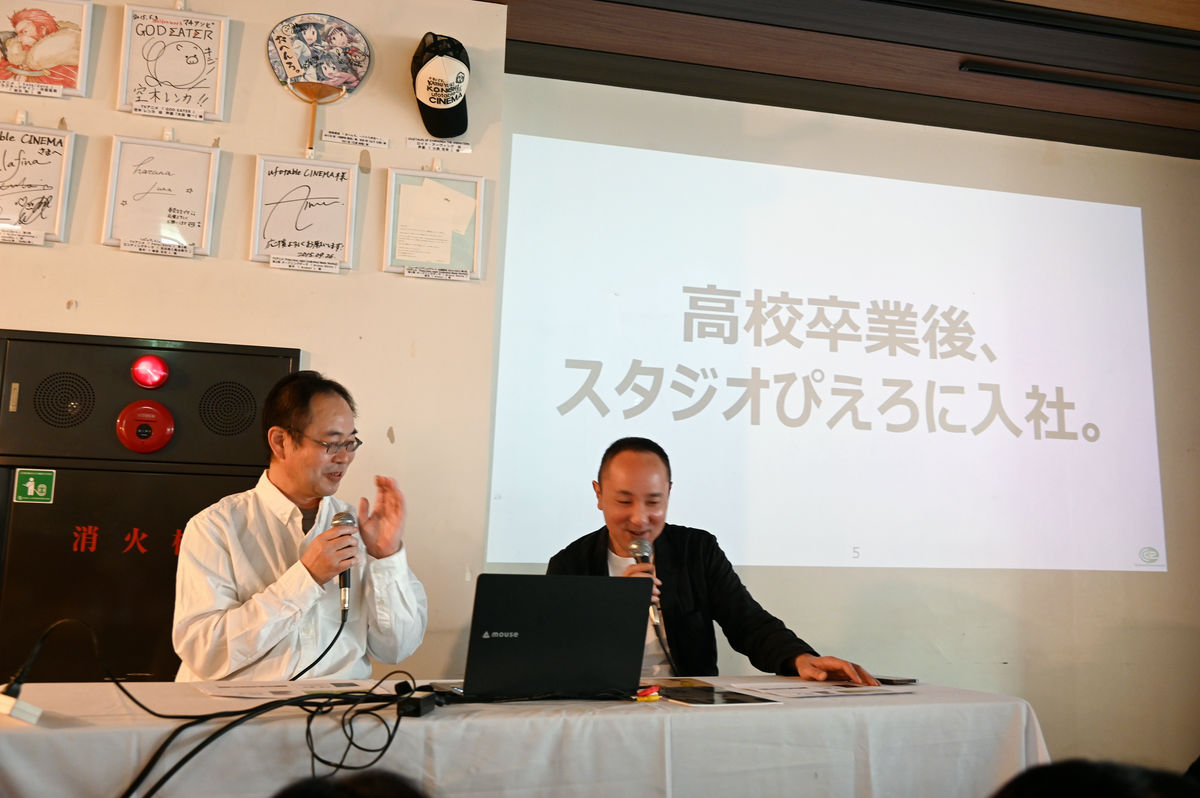
18!? So you graduated from high school and immediately joined an animation studio...that makes you the rookie of all newbies.
Ohira:
The plan was to move up to key animator after three years of animation experience, but I wanted to draw key animators. I pushed hard and was able to draw key animators in six months, but it seems like that was something I was told to do from above.
Matsuyama:
Huh... so that means some cocky rookie got into a fight and quit?
Ohira:
Well, that's it in a nutshell (lol)
Matsuyama:
He's so young! Was he always such a hot-blooded young man?
Ohira:
Well, that's how it is, but I'm being selfish.
Matsuyama:
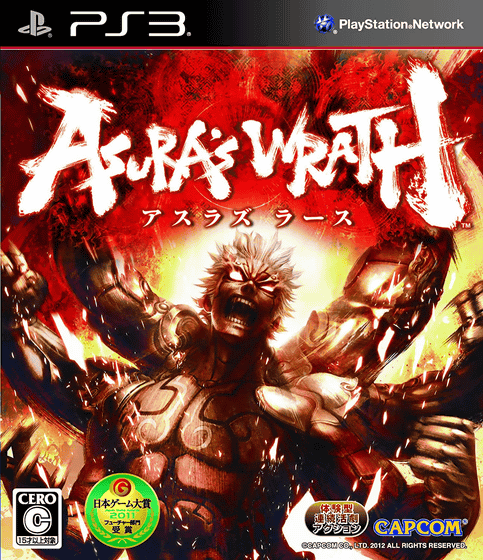
Yes, I know him (laughs). Ohira Shinya and I first met about 10 years ago, when Capcom and I worked together on a game called 'ASURA'S WRATH.'
Matsuyama:
There was an intermission episode that wasn't made with CG, but was made entirely as animation and incorporated into the game. I went to STUDIO4℃ and asked them to bring in an animator who could do an animation with amazing drawings, but at first they refused, saying, 'We're too busy, so it's not possible.'
(Laughter from the audience)
Matsuyama:
We somehow managed to persuade them and 4℃ agreed to make it. We ended up having two amazing animators, Ohira and Nakazawa Kazuto , do one episode each. By the way, the person who was in charge of the 4℃ producers at the time was Otsuka Manabu, who is now the president of MAPPA. Did Otsuka contact Ohira?
Ohira:
This was from Eiko Tanaka (representative of STUDIO4℃).
Matsuyama:
Oh, really? Since you've come all this way, I'm sure everyone would like to see what kind of work you've done. But there's a demo reel that's about 20 minutes long.
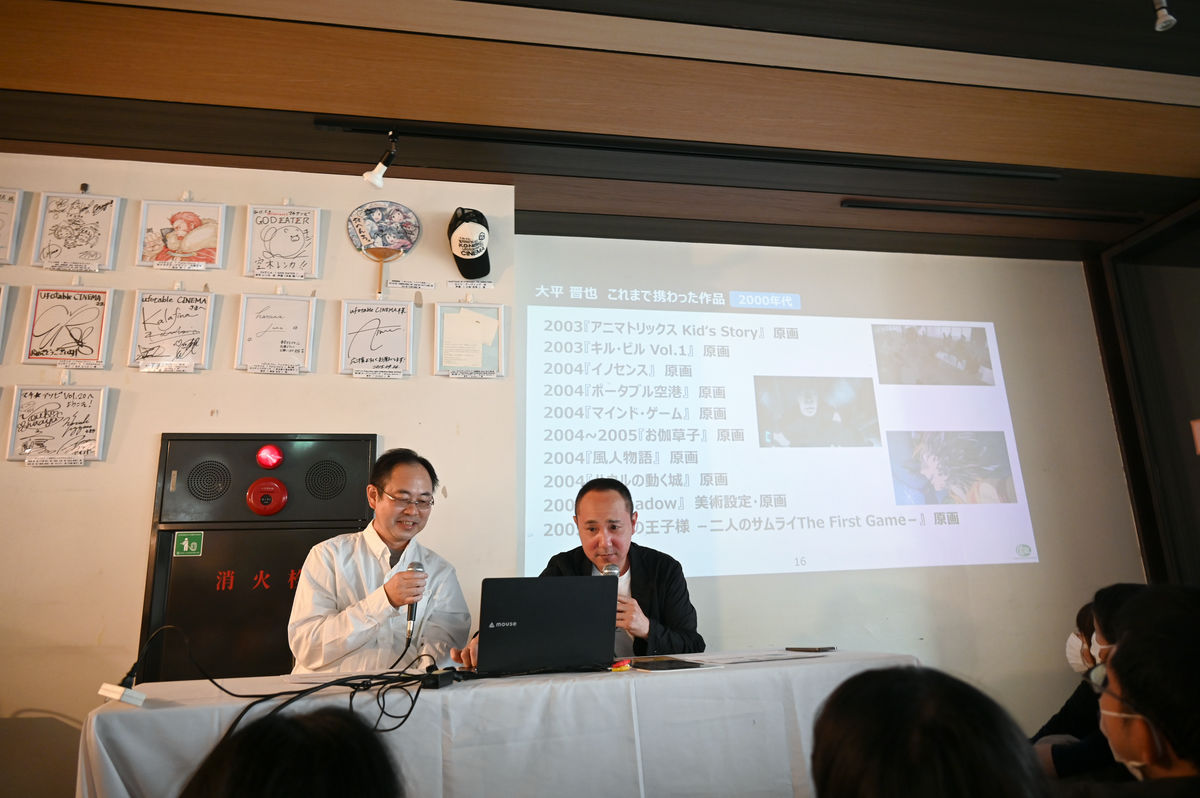
(Laughter from the audience)
Matsuyama:
It's silent, so I thought it would be easier to understand if you watched it while I talked. Well, I think if you watched the video you'd be distracted and not be able to understand what I'm saying, but please just turn your eyes towards it. First up, it's '
'AKIRA 4K Remaster Set' (4K ULTRA HD Blu-ray & Blu-ray Disc) on sale April 24 PV-YouTube
Ohira:
I was around 22 years old at the time.
Matsuyama:
The effect where the flying platform appears. Wow!!
Ohira:
Although I was a newcomer, I took it to Katsuhiro Otomo and had him do the work.
Matsuyama:
Did you bring it to them...? Did you hear about an Akira movie?
Ohira:
I heard that an 'AKIRA' movie was going to be made, but I didn't have any connections to get involved, so I brought some drawings to Otomo, who looked at them in person and said, 'Okay.'
Matsuyama:
Wow! For our generation, the 'AKIRA' manga was something that couldn't be ignored, it was amazing. At the time, the serialization in Young Magazine was put on hiatus to make a movie. During that time, Otomo-sensei was working on animation production. We were all waiting for it to happen. At that time, Ohira-san was already drawing things like this.
Ohira:
A group of super animators gathered.
Matsuyama:
It was like Team Japan. How much work did you do on 'AKIRA'?
Ohira:
Probably about a year.
Matsuyama:
Next up is ' Porco Rosso .'
Ohira:
This was my first time participating in a Hayao Miyazaki production.
Matsuyama:
I heard about this a while ago, but I was wondering if you received job offers by letter. A letter from Hayao Miyazaki?
Ohira:
Yes, it was a letter.
Matsuyama:
What does it say?
Ohira:
It's a job request, so I think it would be more effective to write the letter yourself.
Matsuyama:
'Actually, I'm working on this kind of piece, so could you help me?' That's an amazing thing...
Ohira:
This was ' Junkers Come Here ,' and the pilot episode was my first time as a character designer and animation director, but due to scheduling conflicts, I only worked on the pilot episode. I rarely draw women or girls, but this is that kind of work.
Matsuyama:
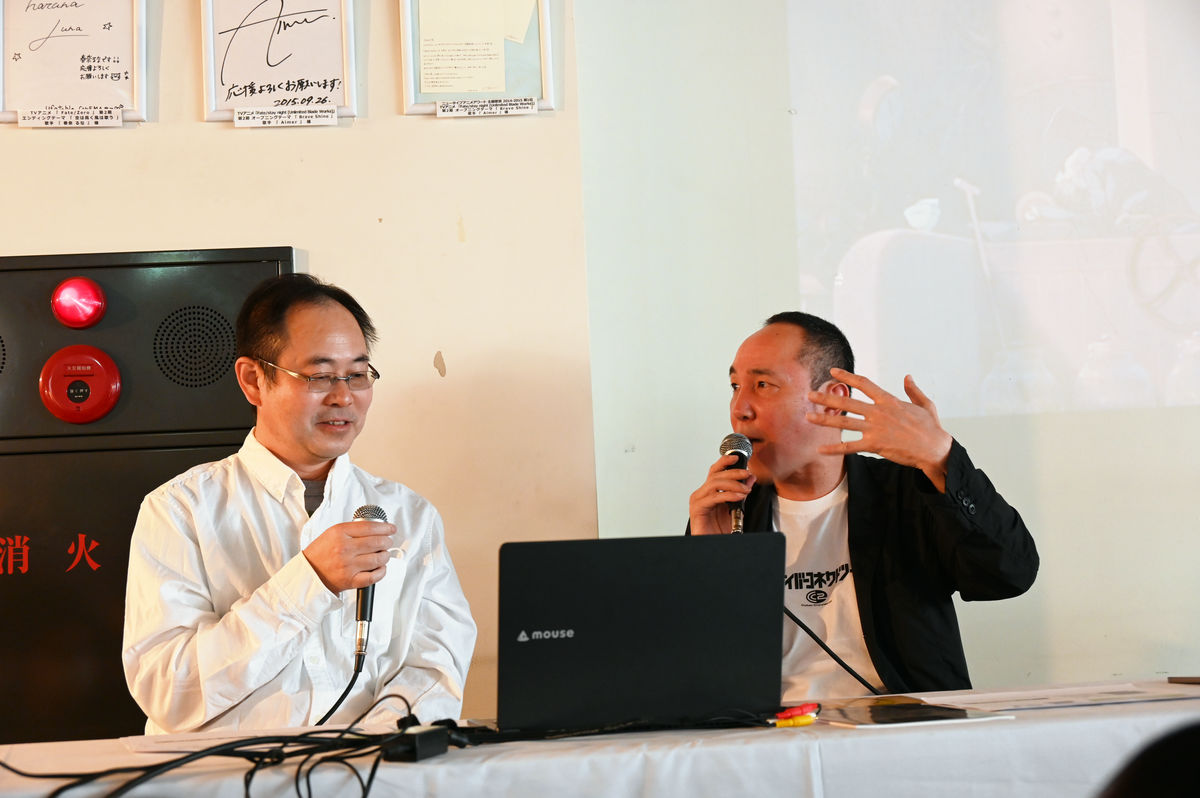
Ever since I first met Ohira-san, I've been impressed by how amazing an animator you are, and I have no idea how you can become such an animator, but... did you start drawing pictures as a child? In elementary school, middle school, etc.
Ohira:
Well, I liked art and crafts, and I did watch anime, but I wasn't thinking, 'I want to be an animator,' or anything, I just watched it casually.
Matsuyama:
Well, how did you come to the conclusion that you wanted to draw it yourself and make it move?
Ohira:
When I was making an independent film in the art club in high school, we decided to include animation alongside live action, so that was the first time I drew each frame individually on animation paper with a marker.
Matsuyama:
We shot each frame individually. It was what we call paper animation. Is that when you discovered the joy of animation?
Ohira:
At that time, I wasn't thinking about becoming an animator, but I was thinking about what to do after graduating from high school.
Matsuyama:
So you jumped into Studio Pierrot. Nowadays, if you want to become an animator, there are animation schools all over Japan where you can learn the basics of anime production and also get help finding a job, but what was it like back then?
Ohira:
There was the Tokyo Designer School back then, but it was common for animators at the time to not only not have a high school diploma, but also to have never attended high school at all.
Matsuyama:
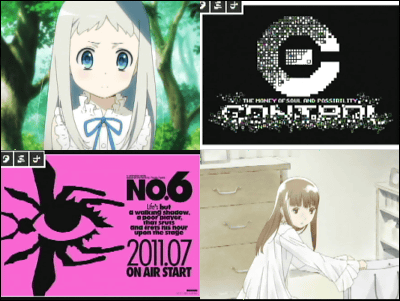
I remember this from ' FLCL ' very well! I was watching it thinking it must have been Ohira-san. Animators start out as indie artists, drawing between the key animations, and if the animation director gives them no feedback, they correct it, and then they repeat the process over and over. Once they're recognized somewhere, they move up to key animation, then animation director, and so on, but isn't Ohira-san's progression quick?
Ohira:
Yes, I think the standard procedure is to basically list the names from the TV series.
Matsuyama:
That's right.
Ohira:
When we were young, OVAs were very popular, and there were some works that were quite playful, or had no acting, so I think we were able to get to do some unusual work.
Matsuyama:
From a fairly early stage, I asked Ohira to direct each scene.
Ohira:
Yes, although it was a bit of a tough start.
Matsuyama:
Oh, is there trouble again?
(Laughter from the audience)
Matsuyama:
What type of annoyance is that?
Ohira:
Umm... I might not draw it according to the setting...
Matsuyama:
That's not okay!
(Laughter from the audience)
Ohira:
Ignore the scenario.
Matsuyama:
That's not okay either! What, you did that?!
Ohira:
That's why I think I am who I am today.
Matsuyama:
Is that the opposite? Rather than just quietly doing the job you're given.
Ohira:
I think that's how it has to be.
Matsuyama:
That's true! Ultimately, a work belongs to the director. There's a director, and people are assigned to achieve different effects, so it would be outrageous to ignore that.
Ohira:
But I thought it would be interesting if there were one or two people like that among 100 people. I wanted to be a part of that.
Matsuyama:
So, that appeal, or rather, your strong will, was apparent from a fairly early stage.
Ohira:
That's right.
Matsuyama:
But there are some people who won't tolerate ignoring instructions, right?
Ohira:
Of course. Both the company and the director said, 'Hey...!'
Matsuyama:
Oh, so that's what happens?
Ohira:
It's normal to be banned.
Matsuyama:
It would be. But, you know, they're two sides of the same coin... Maybe it was because of that repetition that people started to think, 'Ohira is a lively guy, so let's leave it to him.'
Ohira:
I think some people will find it interesting. I love that kind of thing.
Matsuyama:
When I asked STUDIO4℃ to make an animation 10 years ago, they said, 'Ohira-san will do it,' and I replied, 'Well, basically I won't say anything.' To be honest, the script is pretty much nonexistent.
Ohira:
That's right.
Matsuyama:
I intentionally included that part. The main character, Asura, awakens in a rage and goes on a rampage of destruction with his incredible super destructive powers, and the video just goes on and on for 15 minutes, so I told him to do whatever he wanted with it.
Ohira:
Yeah.
Matsuyama:
Even now, if you search for 'Asura's Wrath anime,' you'll find that an incredibly destructive anime was created under Ohira's direction. It was distributed as downloadable content and wasn't included in the package, as the data was extremely heavy and couldn't fit on a disc. So they released it as DLC. It's a legendary episode in a sense, seen and acclaimed by people all over the world.
Ohira:
We had some pretty amazing creators and animators come together.
Matsuyama:
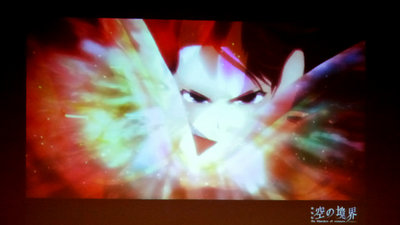
That was because they thought, 'If Ohira-san is going to do it.' Animators seem to be drawn to Stand users, so they gathered around saying, 'I want to work with Ohira-san.' Wow, that smoke in ' Howl's Moving Castle ' and Kamaji's arm in ' Spirited Away ' are examples. But when you look at Ohira-san's work, you see how he delights in doing the most tedious things, like fabric, hair, multiple arms, and effects, things that most people would absolutely hate.
Ohira:
You tend to be given work that has a strong image attached to it.
Matsuyama:
Of course, you know what is expected of you.
Ohira:
It's getting a bit repetitive though (laughs) It's like, 'Ohira again?'
Matsuyama:
No no. This was drawn by hand, you know? I have no idea what it means (lol)
Ohira:
At first, I said I wouldn't participate in Innocence.
Matsuyama:
Is that so?
Ohira:
'If it's just one character, I might be able to do it somehow,' he said, referring to Batou. 'If it's a one-man show, I'll do my best.'
Matsuyama:
Ahh.
Ohira:
I don't want to do something with a lot of characters (laughs).
Matsuyama:
But even so, this is what happens. Just the act of 'running with a gun' can get people moving like this.
Ohira:
In reality, you're not supposed to move around like this when holding a gun, but this is an exaggeration for the anime.
Matsuyama:
Wow, that's the Ohira method, I'm excited.
Ohira:
Apparently the bridge scene was actually in 3D, but they said, 'Since you're Ohira, draw it.'
(Laughter from the audience)
Ohira:
I was like, 'Wait a minute, I said I'd do it if it was easy!' (laughs) When I looked at the original drawings, I realized how hard it must have been, and how long it took to draw one.
Matsuyama:
This wave is just crazy.
Ohira:
This is a TV series (
Matsuyama:
It was finally made into a TV series... And now it's time for ' Tekkonkinkreet .'
Ohira:
I drew it with colored pencils.
Matsuyama:
This really became a hot topic. People were like, 'What is this scene?!' Is it drawn with colored pencils?
Ohira:
I use colored pencils and haven't edited them at all. Some of the transmitted light is from photography. Sometimes I draw with crayons. I enjoy doing that kind of thing.
Matsuyama:
This is something that you just can't achieve with CG. The comfort and ease of animation. That's what makes hand-drawn animation so good, isn't it? It can't be calculated. So when you're working on a movie or an anime and you're told, 'Ohira, we need you to do this whole scene,' you're probably provided with a full set of materials like the script, storyboards, and settings. Do you first read through them and break down what's expected of your part, and then do you sometimes create it exactly as the storyboard says, or do you sometimes suggest, 'How about doing it like this?'
Ohira:
No, I don't make detailed suggestions anymore. I can usually stop them by saying, 'Stop it.'
Matsuyama:
If you say it, you'll be stopped. So you've already started drawing and are saying it's 'done'? (laughs)
Ohira:
It's like, 'Do whatever you want after that.'
Matsuyama:
Yeah!
Ohira:
Otherwise, it's difficult to express individuality in the work of an animator. If you say it in advance, you'll be told, 'This is no good, that's no good.'
Matsuyama:
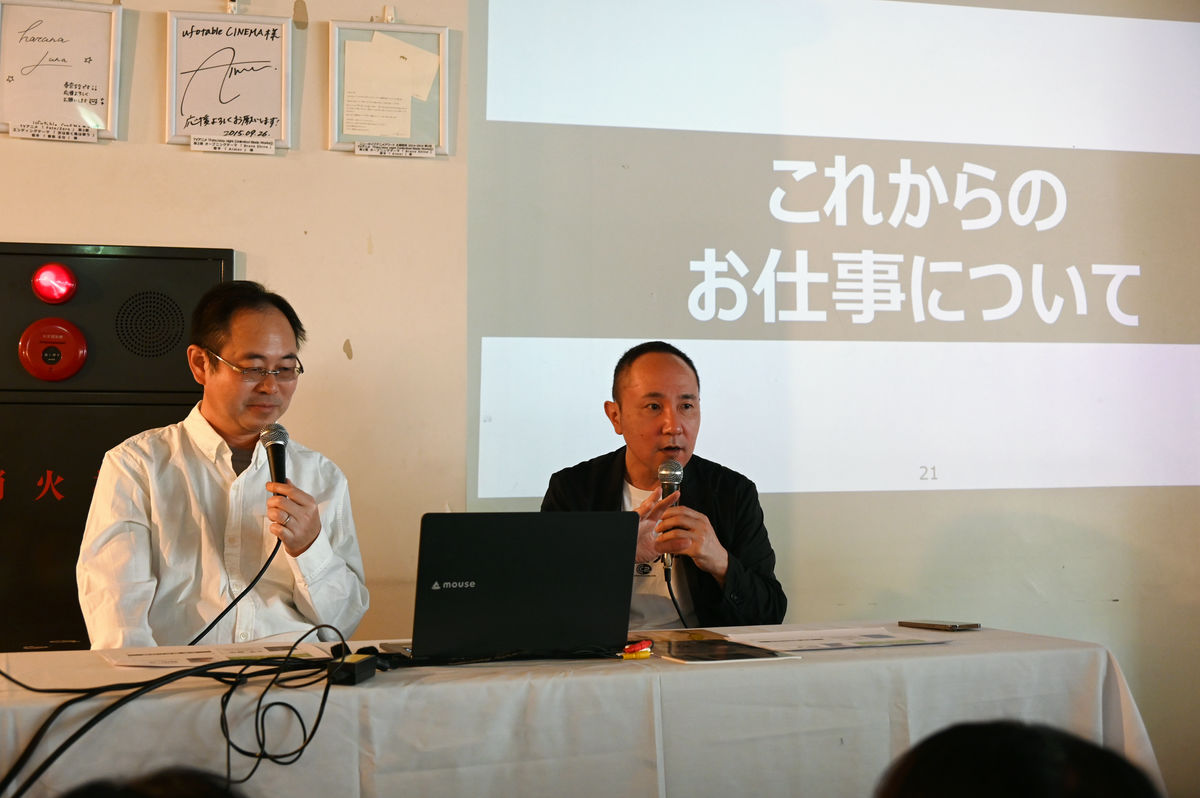
I think there are many people involved here today, so I'd like to ask: if someone wants to work with you, what should they do? A letter?
Ohira:
For now, we're using the name Studio Break .
Matsuyama:
The contact point is a company called Studio Break, and if you say to them, 'I'd like to work with Ohira-san,'
Ohira:
A man named Takahashi will be at the venue as the contact person, and he is also on Twitter.
Matsuyama:
I'd like to have a bit more of an idea of it, but when we asked for Asura's Wrath, we said, 'I'd be happy if you could do it in about a year,' but normally when you ask Ohira-san to do a job, is there a guideline for how far in advance you should start thinking about it?
Ohira:
Is this a guideline?
Matsuyama:
For example, it's October now, but if you say, 'I'd like to ask you to do something before the end of the year, the deadline is December,' that's not going to be possible.
Ohira:
Well, that's true.
Matsuyama:
However, I think that people in the anime industry are in a desperate situation and are asking, 'Can you do something?' In your case, Ohira-san, how long would you be okay with? Can you talk to me about work for the rest of next year?
Ohira:
That's right... Depending on the volume, I might have to devote myself to that work, so I'm not sure if I'll be able to schedule it, but for the small details, I think I'll probably be able to handle it in 2-3 months.
Matsuyama:
I see, so if the job starts around spring next year, we can still discuss it.
Ohira:
That's right. I'll give advice, but I don't do it often (laughs).
Matsuyama:
You're not going to do it! (laughs) What kind of work would you say, 'Maybe I could do it,' and what kind of work would you say, 'That's a bit...'?
Ohira:
Hmm, not so much these days...
Matsuyama:
I think late-night anime about beautiful girls or light novels are a bit different. In the first place, they don't give Ohira that kind of work.
Ohira:
No, but there are a lot of them, so sometimes they come and say, 'What, for me?!'
Matsuyama:
What are you expecting?
Ohira:
There are also cases where people say, 'Is this the price for one cut? You should have looked into it a bit more.'
Matsuyama:
Do you get requests like that? By the way, based on your past work, I have a strong impression that you are a 'theater person.'
Ohira:
I'm slow. I can't take on jobs that don't have a long span of time.
Matsuyama:
Is that so?
Ohira:
However, with some works, it didn't take that long, and I only did about three or four cuts, but it took about a week to ten days. There were thousands of frames of animation, but only about half that, about 500 frames of key animation. I worked at about that pace.
Matsuyama:
It seems that Ohira has an incredible 'maximum instantaneous wind speed.'
Ohira:
I think there's speed.
Matsuyama:
But there are times when you don't work at all.
Ohira:
I'm working, but there are times when I'm not drawing. I'm expanding my imagination.
Matsuyama:
I met him quite often around that time and we would drink together, so I thought, 'This guy is always drinking' (laughs). I thought he was always drinking when he was working, but that's how fast he was doing it. By the way, what about your latest work?
Ohira:
There are some projects that are not readily available, but we have completed delivery of one project. This project took about four years.
Matsuyama:
4 years!
Ohira:
The other one took a little longer, about five years, because we started with the pilot.
Matsuyama:
This is from the TV series, right? Is it okay to spend so much time on it?
Ohira:
I wonder... what is it?
Matsuyama:
Either the producer is crazy or has already given up. It's too far to finish. This is true for anime, games, and movies. You see the finished products, but there are also projects that have started but haven't started yet, or that have been frozen, or that have been completely shelved, or that only make a pilot film. There are also many games where the entire project is abandoned after just making a prototype.
Ohira:
That's a lot of people. They feel like they've come so far and now it's all over.
Matsuyama:
The length of the production period is extraordinary...
Ohira:
I'm sure it will be completed properly and unveiled, but it's hard to say... After all, it's all about people seeing it, so I hope it will somehow take shape. That's why his name hasn't come up at all for the past four years.
Matsuyama:
Is that okay? Can I tell you what scenes are in that movie?
Ohira:
It's still not good enough, but it's a scene that really suits me.
Matsuyama:
Ah, Ohira-san has come up with another annoying scene that people will dislike (laughs). On the other hand, it's also because young people can't draw it. So now you've reached a turning point.
Ohira:
Yes, so that's how Matsuyama got me the job.
Matsuyama:
What are you announcing?! (laughs) We're a game company, and for example, the effects of Tanjiro's Hinokami Kagura in '
(Laughter from the audience)
Matsuyama:
I've said it all already (lol) So, Ohira-san will continue to work on anime from now on.
Ohira:
Yes, there are some big titles coming up.
Matsuyama:
We will be doing new things together in the gaming field, so we hope you will look forward to Ohira's future success.
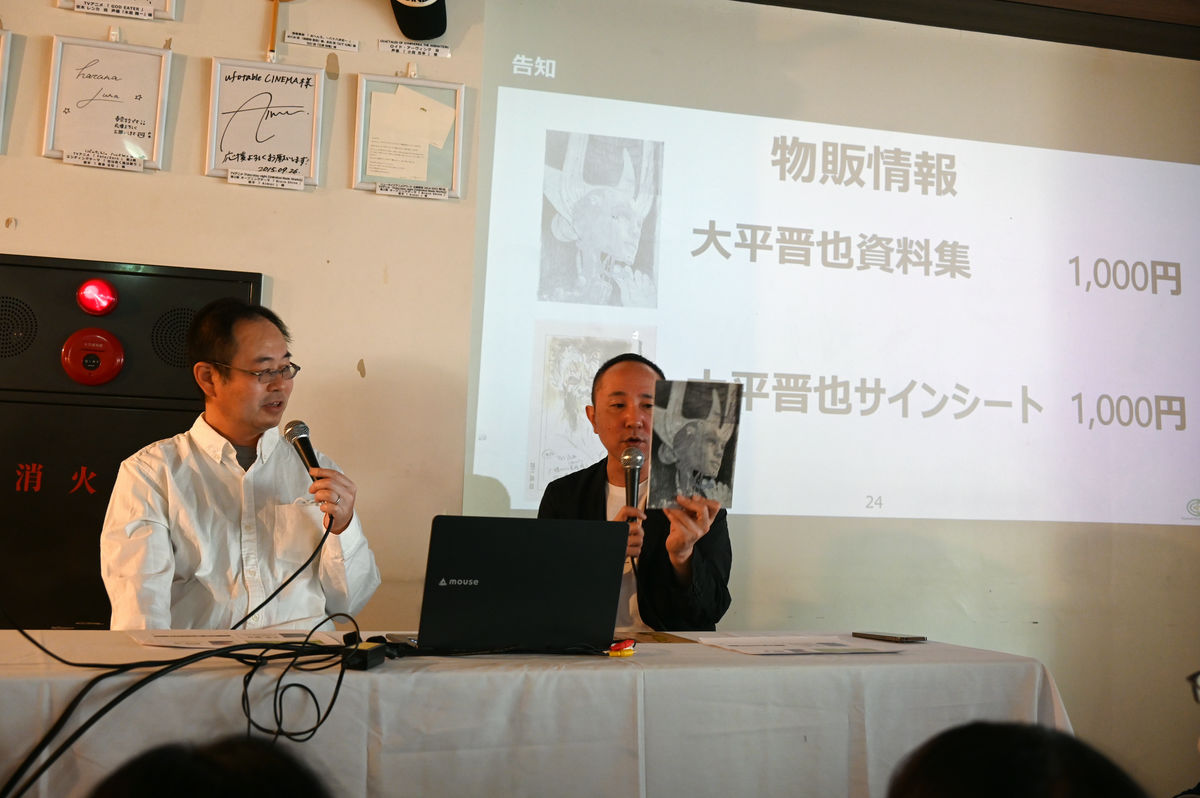
After this, a sales event for the collection of materials and autograph sheets was held at the venue, and Ohira signed autographs for purchasers on the spot.
Related Posts: