Children are more likely to exercise self-control when it comes to other children than themselves

by
In the famous experiment on children's self-control, the ' Marshmallow Test ,' it was found that one-third of children 'can refrain from eating the marshmallow in front of them in order to get two marshmallows later.' A new experiment that improved this experiment found that 'children can exercise self-control for other children.'
Children Delay Gratification for Cooperative Ends - Rebecca Koomen, Sebastian Grueneisen, Esther Herrmann,
https://journals.sagepub.com/doi/10.1177/0956797619894205
'Marshmallow test' redux: Children show better self-control when they depend on each other | EurekAlert! Science News
https://www.eurekalert.org/pub_releases/2020-01/afps-tr011420.php
Are Young Children Capable Of Delayed Gratification?
https://www.theravive.com/today/post/are-young-children-capable-of-delayed-gratification-0003520.aspx
New twist on marshmallow test: Kids depend on each other for self control | Ars Technica
https://arstechnica.com/science/2020/01/new-twist-on-marshmallow-test-kids-depend-on-each-other-for-self-control/
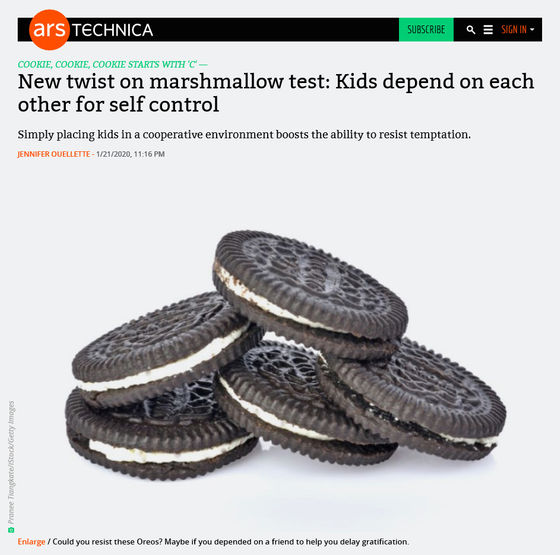
In 1972, Stanford psychologist Walter Mischel conducted the 'Marshmallow Test,' in which 186 four-year-old children participated. In this experiment, an adult gave each child a marshmallow and told them, 'I'll give you this one, but if you can wait 15 minutes before eating it until I come back, I'll give you another marshmallow. If you eat the first one while I'm gone, you lose the second one.' Then, the adult left the lab.
The child who was left alone tried various ways to resist eating the marshmallow, such as covering their eyes with their hands or smelling the marshmallow, but in the end, only one-third of the children were able to endure and get the second marshmallow.
A research group led by Rebecca Koomen, a developmental psychology researcher at the Max Planck Institute for Evolutionary Anthropology, conducted an experiment based on Michel's experiment to investigate how children's self-control is affected by cooperative relationships with other children. The experiment involved 5- to 6-year-old children living in Germany. First, as a warm-up before the experiment, the children were paired and asked to play with balloons together to help them become more comfortable with each other.
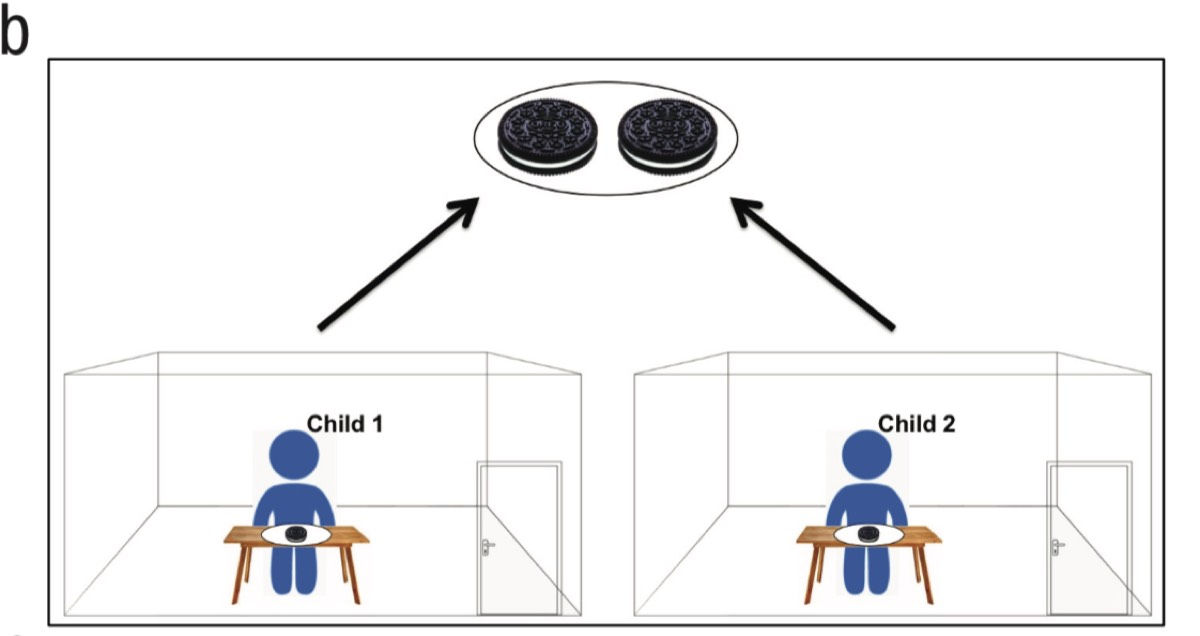
The children were then split into pairs and subjected to two experiments. The first, a 'single experiment,' was a control that replicated Michel's experiment. Each pair was placed in a separate room and told, 'You'll get one
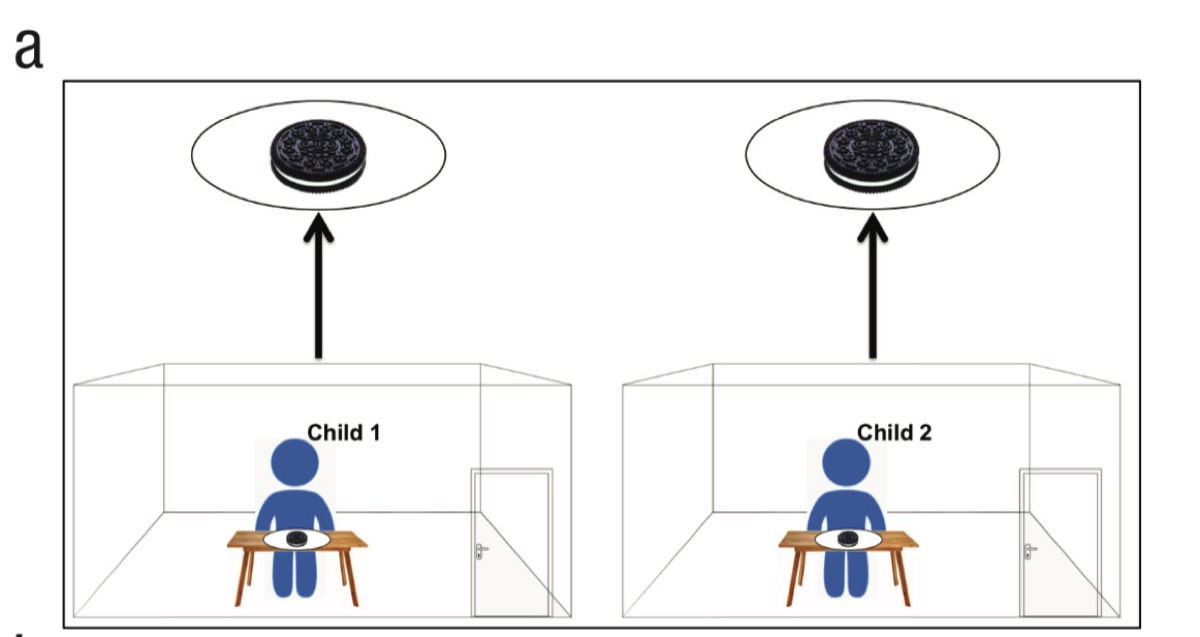
In the next 'interdependence experiment,' the children were told, 'I'll give you one
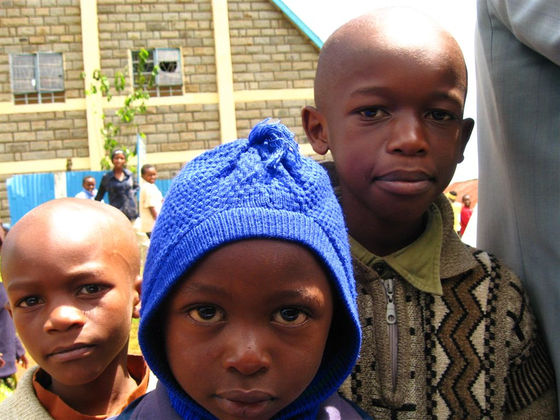
To eliminate cultural influences, the research group also conducted a similar experiment in Kenya on 5- to 6-year-old
by meaduva
In both experiments, the Kikuyu children were more likely to resist sweets than the German children, and in both regions, the children were more likely to resist cookies when they were in the 'interdependent' condition than when they were in the 'isolated' condition.
Regarding these results, co-author Sebastian Gruneisen said, 'In the 'interdependent' experiment, both children were expected to tolerate each other. This means that the children were unable to communicate with each other and had to trust that the other child was also being patient. Nevertheless, the fact that the 'interdependent' children performed better proves that children are strongly motivated to cooperate at an early stage of development.'
Koomen also said, 'The fact that children held back even when there was a possibility that they would not receive an additional reward suggests that children's behavior is influenced not only by material goals but also by a sense of responsibility and obligation to their social partners. In other words, children may have refrained from eating sweets in order to avoid disappointing their partners.' He suggested that children are better able to exercise self-control when they think about other children's interests rather than just themselves.
Related Posts: