Children who grow up in areas with little green space are 55% more likely to have mental illness

by
A recent study showed that people who grew up in areas with little green space had a 55% higher risk of developing mental illness later in life. While green spaces tend to be sacrificed for the construction of buildings in cities, there is a growing need for urban planning that takes into account the benefits of green spaces for people's lives.
Residential green space in childhood is associated with lower risk of psychiatric disorders from adolescence into adulthood | PNAS
https://www.pnas.org/content/early/2019/02/19/1807504116
Kids who grow up near green space have better mental health — Quartz
https://qz.com/1559863/kids-who-grow-up-near-green-space-have-better-mental-health/
Researchers at Aarhus University in Denmark used satellite images taken between 1985 and 2013 to create a map showing the proximity of green spaces to 943,027 Danish children aged 0 to 10. The study collected longitudinal data on subjects' mental health, socioeconomic status, and place of residence, and compared the children's 'accessibility to green spaces' with their 'mental health.' The results showed a significant association between mental illness and accessibility to green spaces.
'Growing up in a consistently green environment during childhood is associated with a lower risk of developing mental illness later in life,' said study author Kristine Engemann. Children living in areas with the lowest levels of green space had a 55% higher risk of developing mental illness than children with higher levels of green space, even after accounting for other risk factors.

by
The mechanism behind why green environments improve children's mental health is unknown, but previous research has shown that living near nature encourages people to exercise and strengthens social bonds. Other research has also shown that children who attend schools with more green space have better cognitive development than those who attend schools with less green space. However, it's important to note that all of the above studies have only revealed an 'association' between the two factors, and have not proven a causal relationship.
'Urban environments are typical of what humans consider 'stressful,'' Engemann said, noting that polluted air, infectious diseases, and poor socioeconomic conditions increase the risk of developing mental illness. He also noted that while cities tend to have fewer places for children to relieve stress, having a garden or park to play in after school can help children quickly recover from stress.

by Maarten van den Heuvel
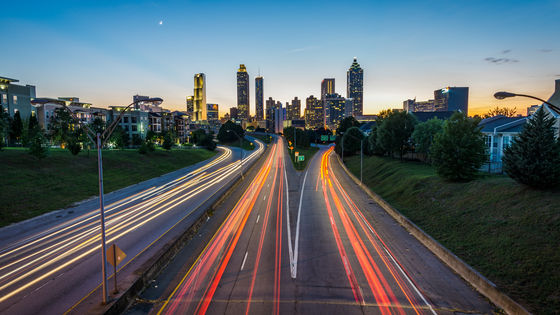
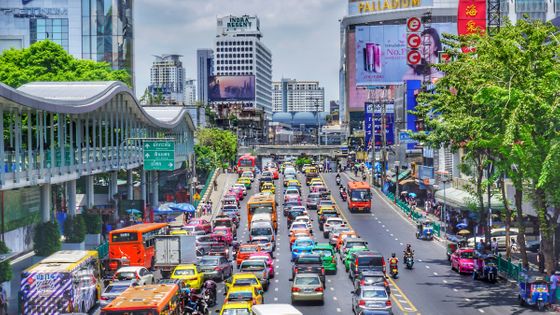
On the other hand, in today's world where more than 50% of the world's population lives in cities, it is true that urban centers have better health and educational resources. In densely populated urban centers, green spaces tend to be sacrificed in order to build buildings, but Engemann said, 'It is important that green spaces are recognized as not just decorative, but as something that is beneficial to people's lives.' He argues that urban design should emphasize the connection between people and greenery.
Related Posts: