A teacher gets rich selling his own teaching materials online, and the debate over whether it's right or wrong
To help students learn more efficiently, teachers sometimes create their own teaching materials, but there are websites that sell these materials online. Some teachers are making a lot of money by selling their original teaching materials, but while some say it leads to the sharing of good ideas, others argue that teaching materials should be sold.
Millionaire teachers: Rising standards have led to a profitable online marketplace for lesson plans (w/video) | Tampa Bay Times
http://www.tampabay.com/news/education/k12/millionaire-teachers-rising-standards-have-led-to-a-lucrative-online/2320189
Teachers Pay Teachers , a website where you can register and sell your own teaching materials online, has over 2 million teaching materials uploaded, and over 80,000 teachers are selling 'products.' Teachers are paid a 40% commission for free members and a 15% commission for premium members who pay $59.95 a year.
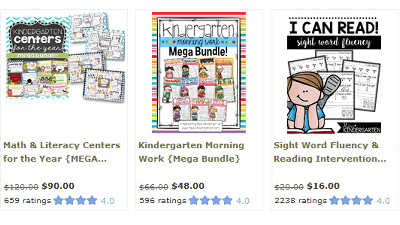
While some experts have expressed disapproval of educational materials sales sites, online transactions are booming. While many make small amounts of money, there are some people, like the account 'Miss Kindergarten,' who has reportedly made as much as $1 million over the past six years. Miss Kindergarten, whose real name is Heidar Hartstein, a 32-year-old woman, said, 'I'm so grateful that Teachers Pay Teachers came into my life and that my passion and career have come together here.' Hartstein now has the financial means to take a few years off work to support her upcoming baby.
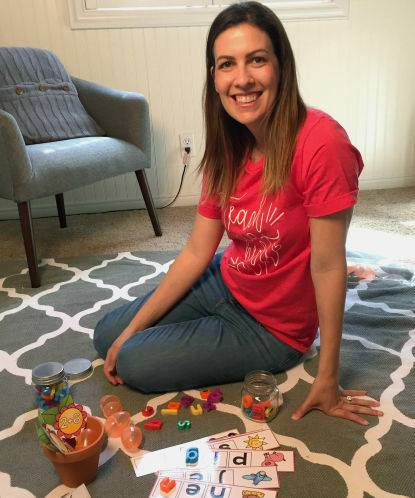
Miss Kindergarten sells a wide range of educational materials, from free alphabet cards to math and literacy materials for $120 a year, which she distributes widely through her blog and social media. The sheer scale of her business has also meant an increasing workload. 'This should be treated as a full-time job, completely separate from your regular job. It requires a tremendous amount of effort,' she says.
Founded in 2006, Teachers Pay Teachers surpassed the $100 million milestone in 2016, the first time it paid sellers. The space is gaining traction, with large companies like Teachwise, Teacher's Notebook, Houghton Mifflin Harcourt, and Amazon also entering the space.
On the other hand, some have questioned whether educational materials should even be sold. Some have pointed out that there is strong resistance to the monetization of educational materials, which teachers have worked hard to create and make easy to understand. Others point out that the inability to verify whether the materials being sold are actually the property of the teachers in question could lead to copyright infringement.
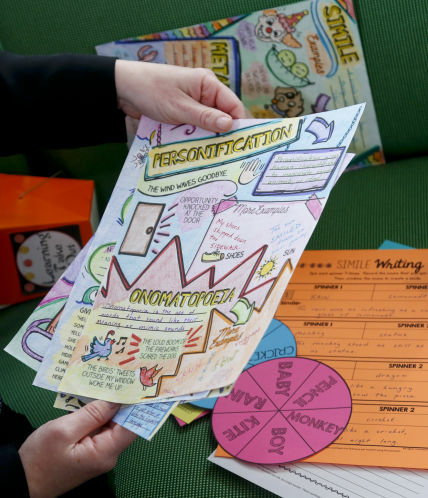
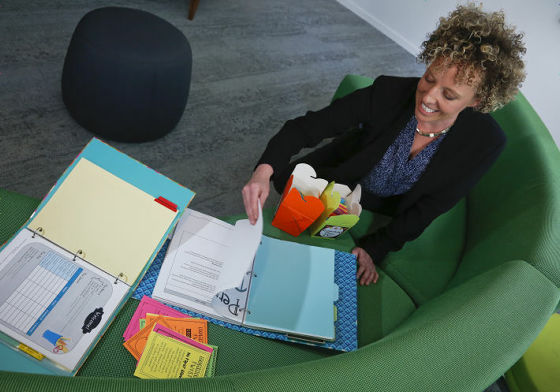
However, from the perspective of teachers in the field, there are also many benefits. In many cases, teachers develop their own teaching materials in their private time after work, which can be quite a burden. One teacher said that he sometimes spent 20 to 30 hours a month developing teaching materials, but if he can find the materials he's looking for on a site like Teachers Pay Teachers, he can buy his time for just a few dollars (a few hundred yen), and in some cases, he may end up with better materials than he had originally planned. Another teacher said that when he was creating his own teaching materials, a colleague asked him, 'Why are you reinventing the wheel ?', which led him to use an online teaching material sharing service.
Hannah Hudson, an administrator of WeAreTeachers , a website where teachers share various information, points out that teachers trust and support each other, and that the web has made it easier to access resources developed by others, which has reduced costs compared to traditional methods. 'When teachers invest their own money in the materials they use in their classes, it means more than just money,' she says.
But the rise of the web also brings its own set of drawbacks. Bob Faraas, a spokesman for the National Association of Secondary School Principals , a nonprofit organization representing school principals, points out that introducing ownership of ideas and content undermines the collaborative spirit fostered in traditional school education. In fact, some states even prohibit teachers from selling educational materials online in their contracts.
Some also point out the nature of how these materials were created. If they were developed during a teacher's working hours, they become the property of the school, and individuals are not permitted to profit from them. In a 2004 case, a suspended teacher sought to retain ownership of test papers and other assets left at the school, but a New York federal court upheld the state's decision that denied ownership. Federal appeals courts have also ruled that schools own the materials teachers create during their work hours.
However, this view has also been challenged. Miss Kindergarten, aka Hartstein, said, 'All of the materials I create are created on my own time. As a kindergarten teacher, I'm so busy during the day that I barely have time to sit down and take a breather.' Hartstein added that she has never sold materials with the intention of getting rich, but rather to share her experiences with others. 'If a teacher has some great materials for their students, why wouldn't they share them with others? And wouldn't it be great if they could make some money from it?'
Related Posts:



in Education, Note, Web Service, Posted by darkhorse_log