Exercise improves attention and concentration in children with ADHD

By
ADHD , which has symptoms such as inattention, hyperactivity, and impulsivity, is a developmental disorder whose causes are still not fully understood, and it affects both children and adults alike. People with ADHD symptoms, especially children, can have a negative impact on their school performance, and various solutions have been explored. A university study has found that exercise can improve the attention and concentration of children with ADHD, potentially improving their school performance.
Measurement of the Effect of Physical Exercise on the Concentration of Individuals with ADHD
http://www.ncbi.nlm.nih.gov/pmc/articles/PMC4372555/
The causes of ADHD remain controversial, and no fundamental cure has yet been found. However, in 2014, it was reported that exercise can improve ADHD symptoms . However, no experiments had been conducted to measure and quantify the effects of exercise on ADHD patients. A joint research team from the Universidad Mogi das Cruzes and the Catholic University of São Paulo in Brazil conducted an experiment on ADHD patients and successfully quantified the effects of exercise on ADHD symptoms through statistical analysis.
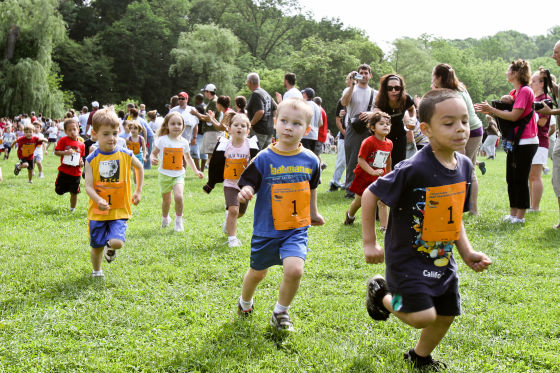
The joint research team conducted an experiment in which participants ran for five minutes, then played a game after the run. The results were analyzed using statistical and post-hoc tests . The 56 participants, ages 10 to 16, were divided into four groups: those with ADHD symptoms who participated in both running and gaming (group GE-EF), those without ADHD symptoms who participated in both running and gaming (group GC-EF), those with ADHD symptoms who participated in gaming only (GE), and those without ADHD symptoms who participated in gaming only (GC).
By
In the experiment, subjects in groups GE-EF and GC-EF first completed a five-minute relay race without a break, followed by a five-minute interval during which they played the game ' Prince of Persia .' The game consisted of predetermined tasks, and participants had to complete them as quickly as possible. To complete the tasks, participants had to carefully read and understand the game's scenario and obtain clues from it, which required concentration and logical thinking.
The GE and GC groups, which did not exercise for five minutes, also participated in the game play. The research team analyzed the results of the four groups using D'Agostino test, Kruskal-Wallis test , and post-hoc tests. To ensure accuracy of the game play results, the subjects were asked to play another game beforehand, and only children who were judged to be at an intermediate level of game skill were included.
Although the experiments for each group were conducted on different days, the time used for the experiments was the same for all groups. When the research group analyzed the results, the GE-EF group with ADHD symptoms who played games after running recorded a 35% higher score than the GE group with ADHD symptoms who only participated in game play. In other words, exercising before playing games results in approximately 35% better results than not exercising.

By Erik (HASH) Hersman
We also found that the GE-EF group and the GC group, who did not have ADHD symptoms and only participated in gameplay, had very similar results, with only a difference of about 2.5% in the analysis results.
The research group concluded that this experiment showed that short bouts of intense exercise can improve attention and concentration in children with ADHD, and that exercise may have some effect on improving the academic performance of children with ADHD.
Related Posts: